Dancing the Revolution: From Dancehall to Reggaetón
Apr 14, 2026 - Sep 20, 2026

About the Exhibition
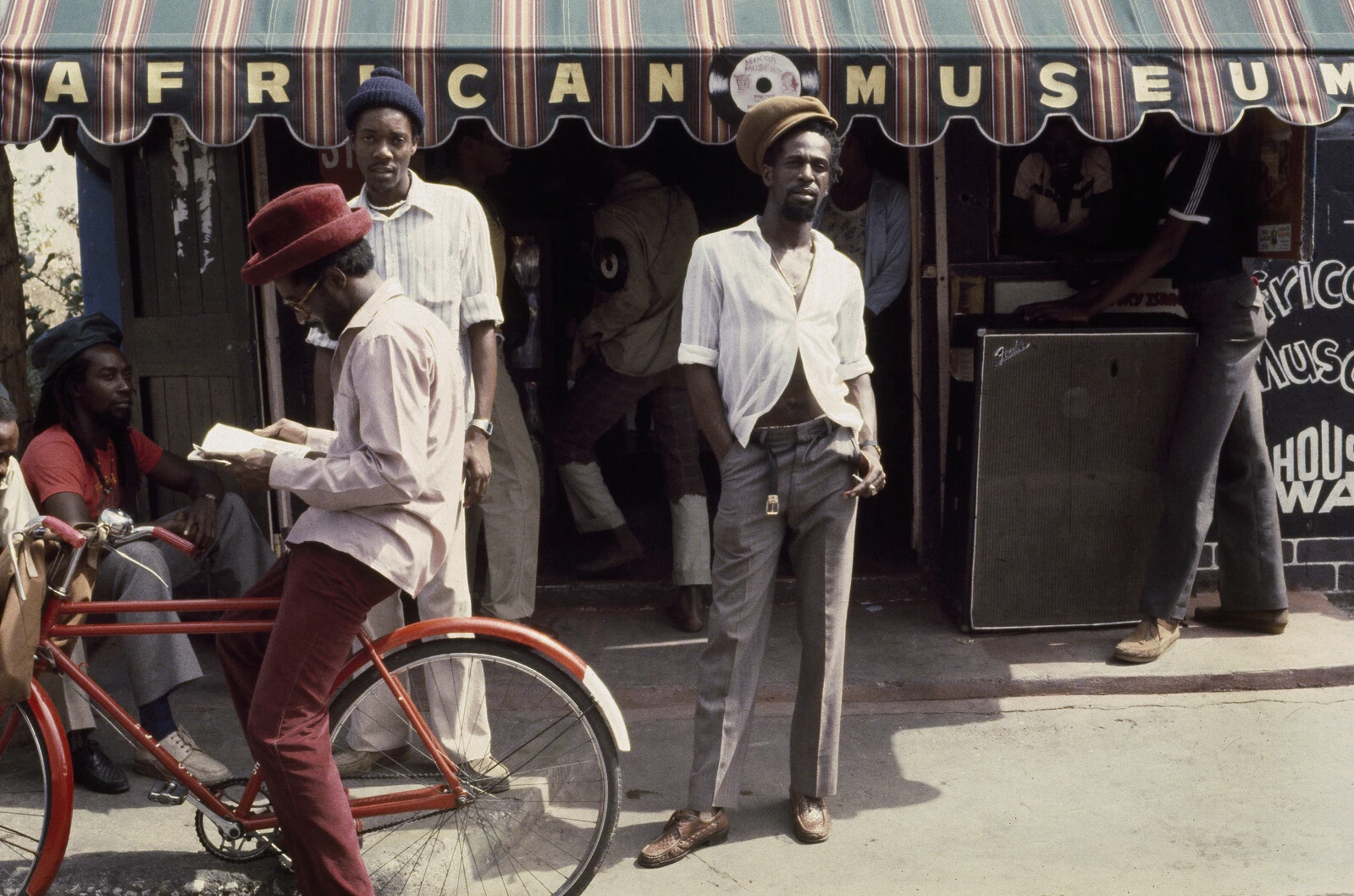
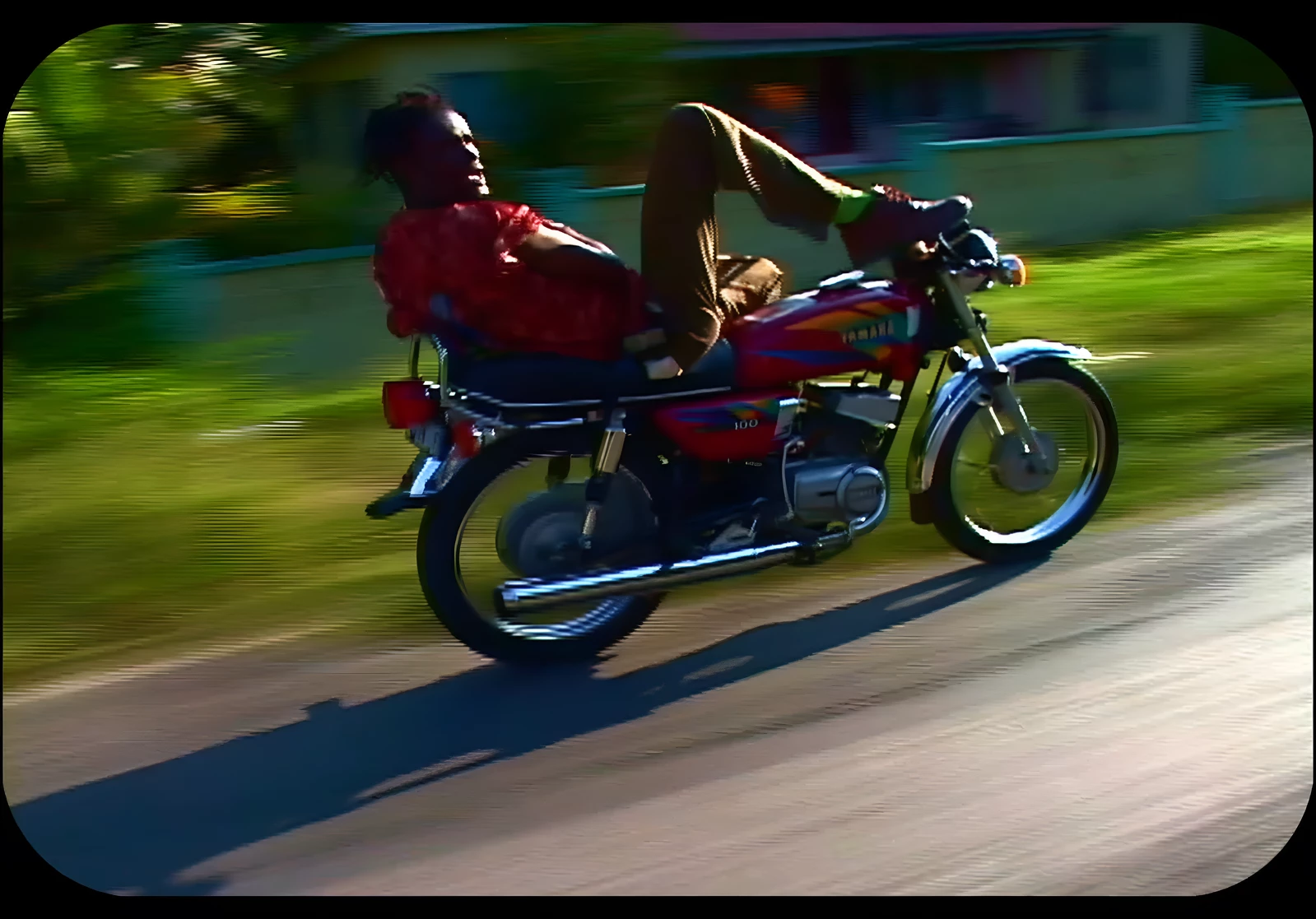
Dancing the Revolution: From Dancehall to Reggaetón is a major exhibition that explores and expands the visual, political, and spiritual histories of dancehall and reggaetón through contemporary art—two dynamic genres that have transcended their grassroots origins to shape global culture. From Kingston to San Juan through Panama, New York City, and London, Dancing the Revolution positions music and dance as a revolutionary practice for collective liberation rooted in the struggle against colonial oppression.
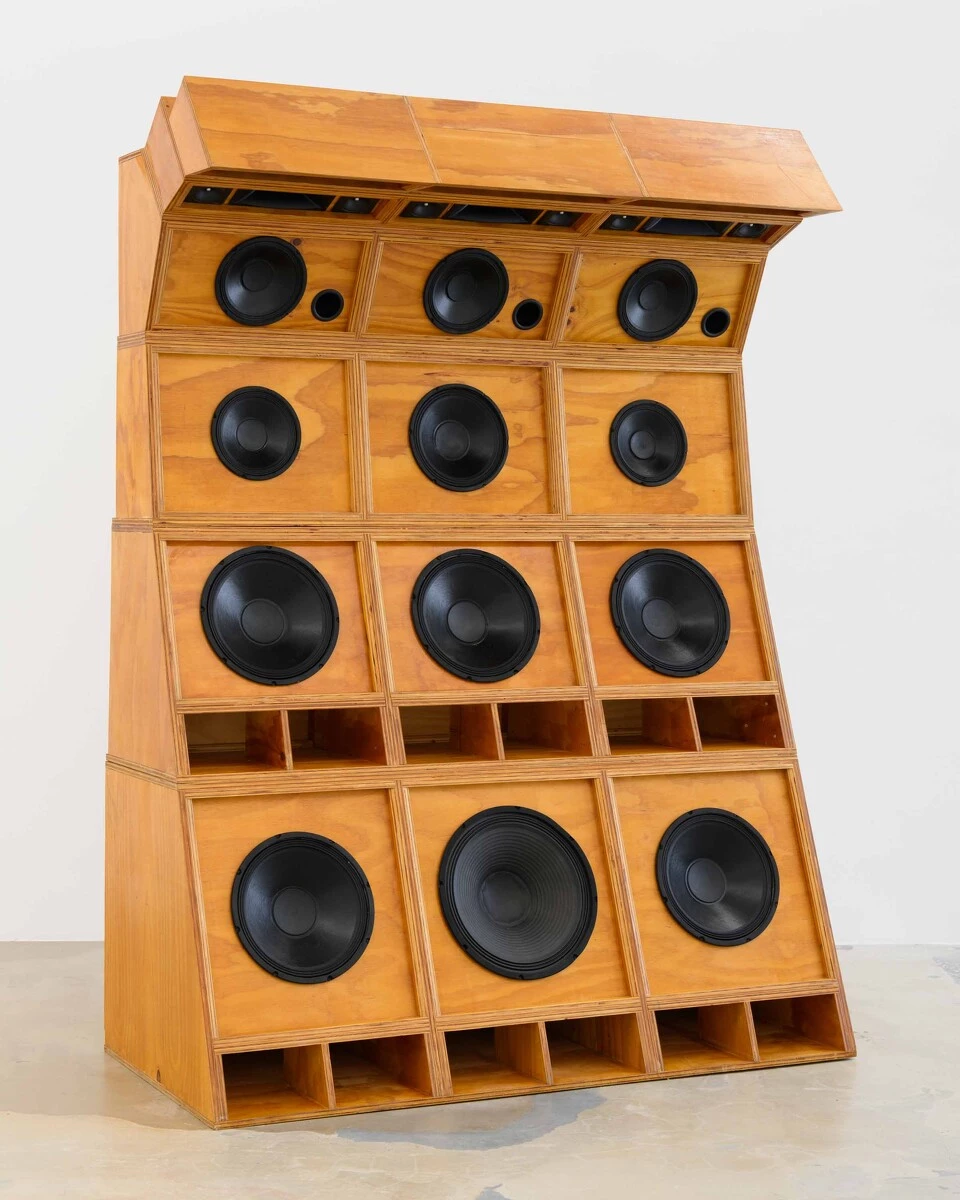
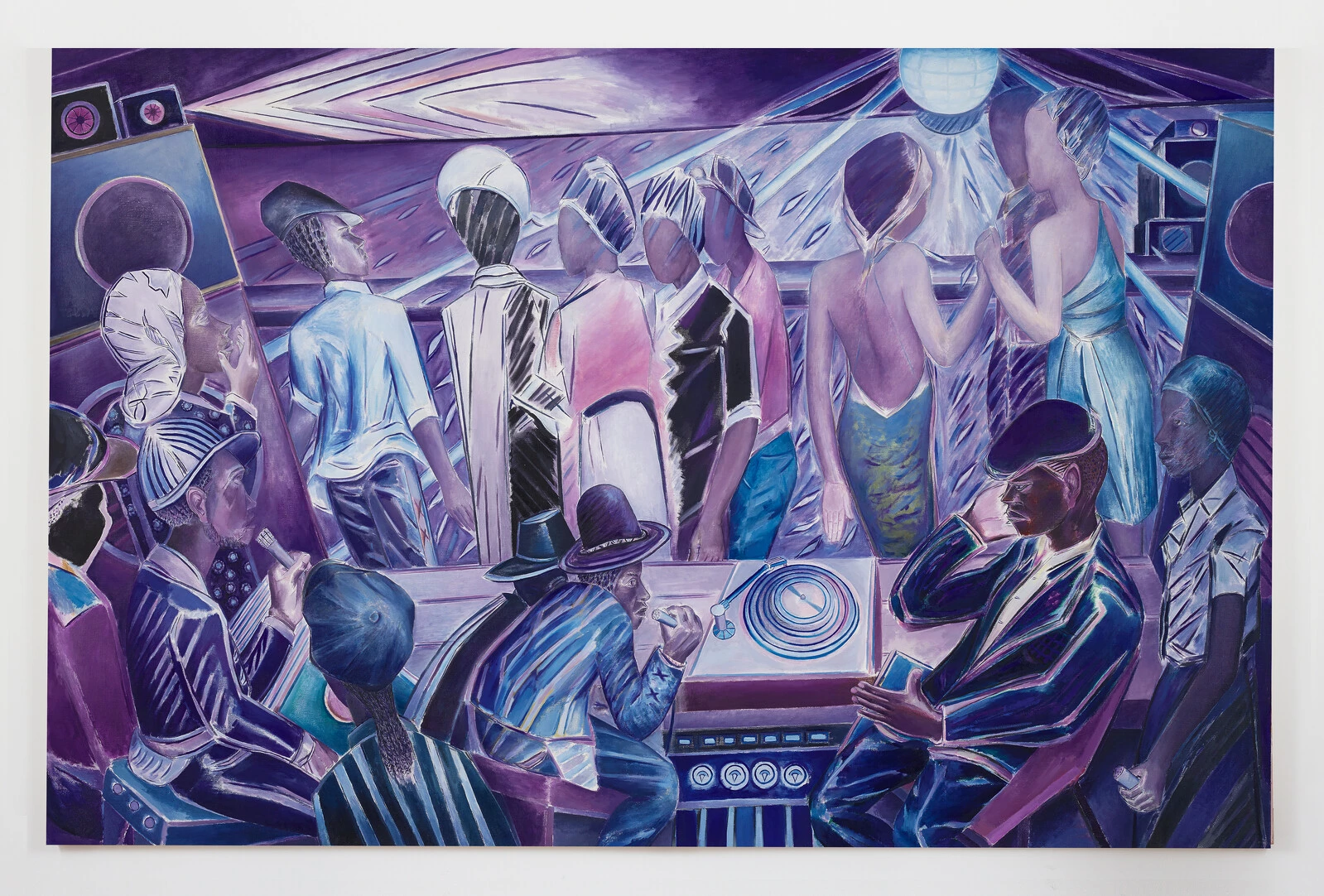
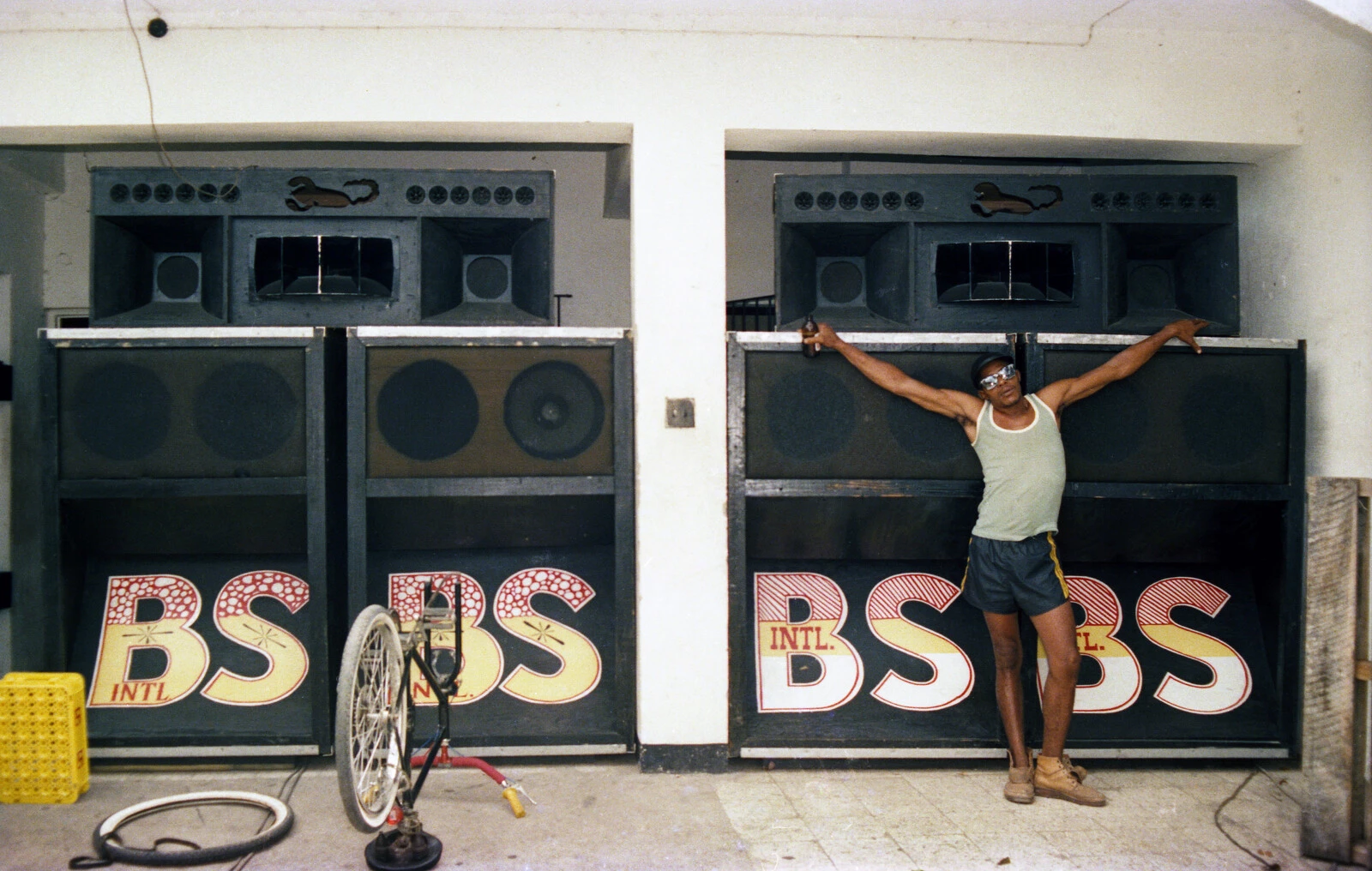
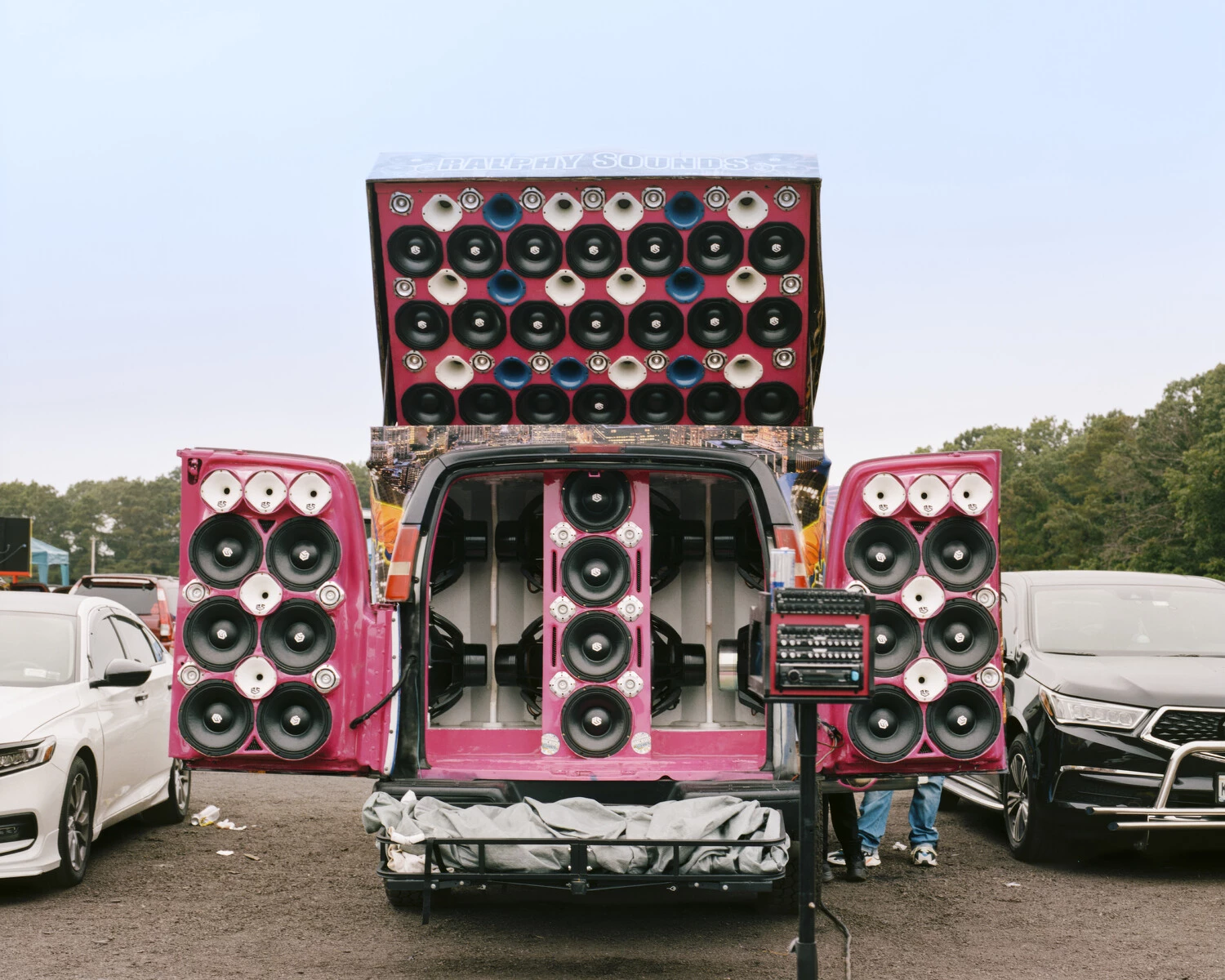
Dancehall and reggaetón are not only musical genres but cultural practices and powerful expressions of resistance and joy—reminders of the Caribbean’s centuries-old traditions of dance and music as means of liberation and protest rooted in Black Atlantic history and culture. Dancing the Revolution showcases pivotal moments and themes from these histories, starting with the sound system, a mobile disco that embodies both a community experience and a vital civic institution.
Presenting work across varied mediums, Dancing the Revolution includes painting, sound sculptures, installations, photographs, and video, showcasing how artists have been and continue to be inspired by these histories and the visual forms that emerge from them. The exhibition features more than forty contemporary artists, including Isaac Julien, Edra Soto, Alberta Whittle, Carolina Caycedo, and Lee “Scratch” Perry. A special commissioned mixtape project by Juan Rivera invites visitors to learn about the evolution of these popular genres in Panama and hear the iconic songs that have paved the way for the global phenomenon of reggaetón.
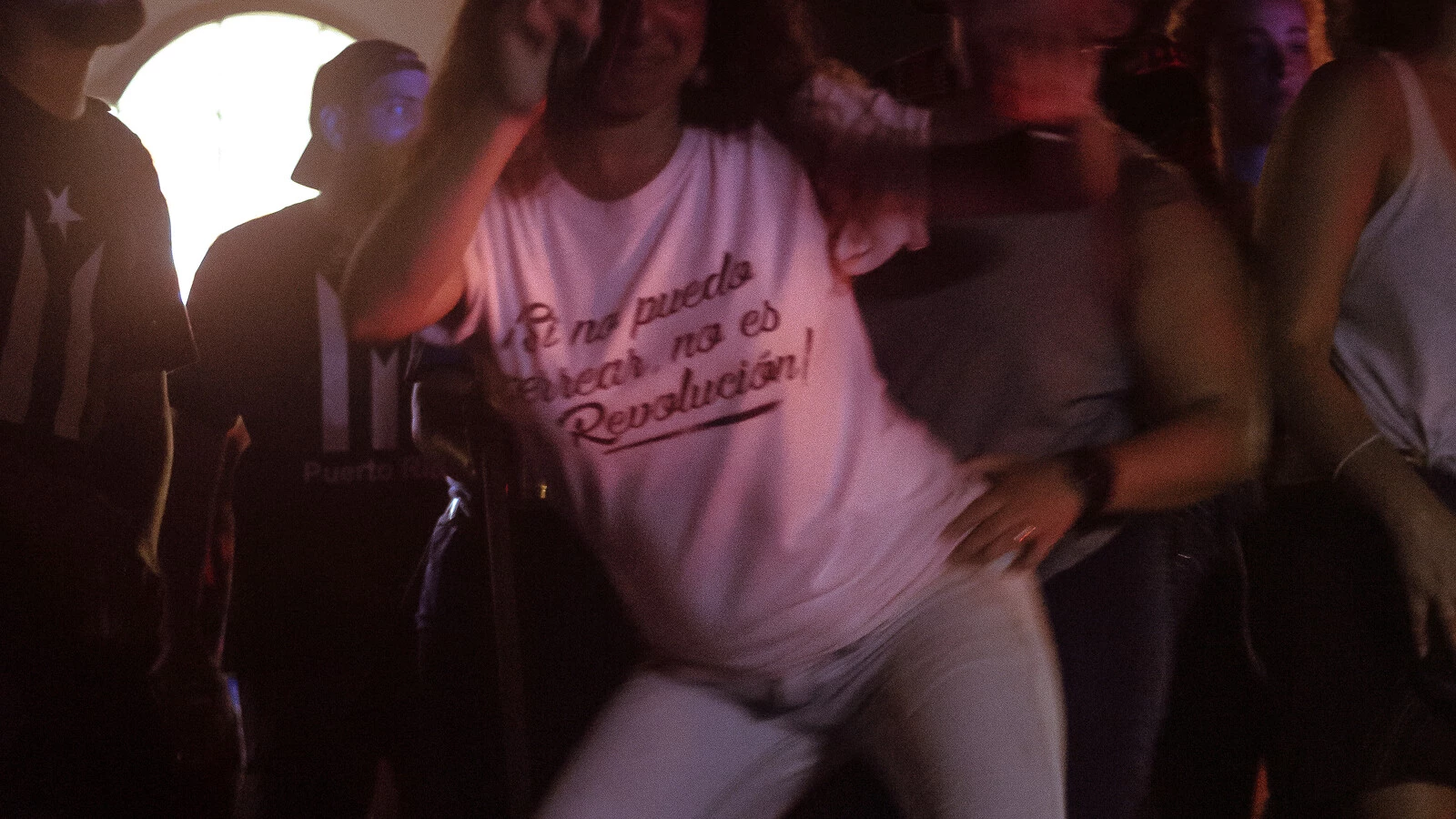
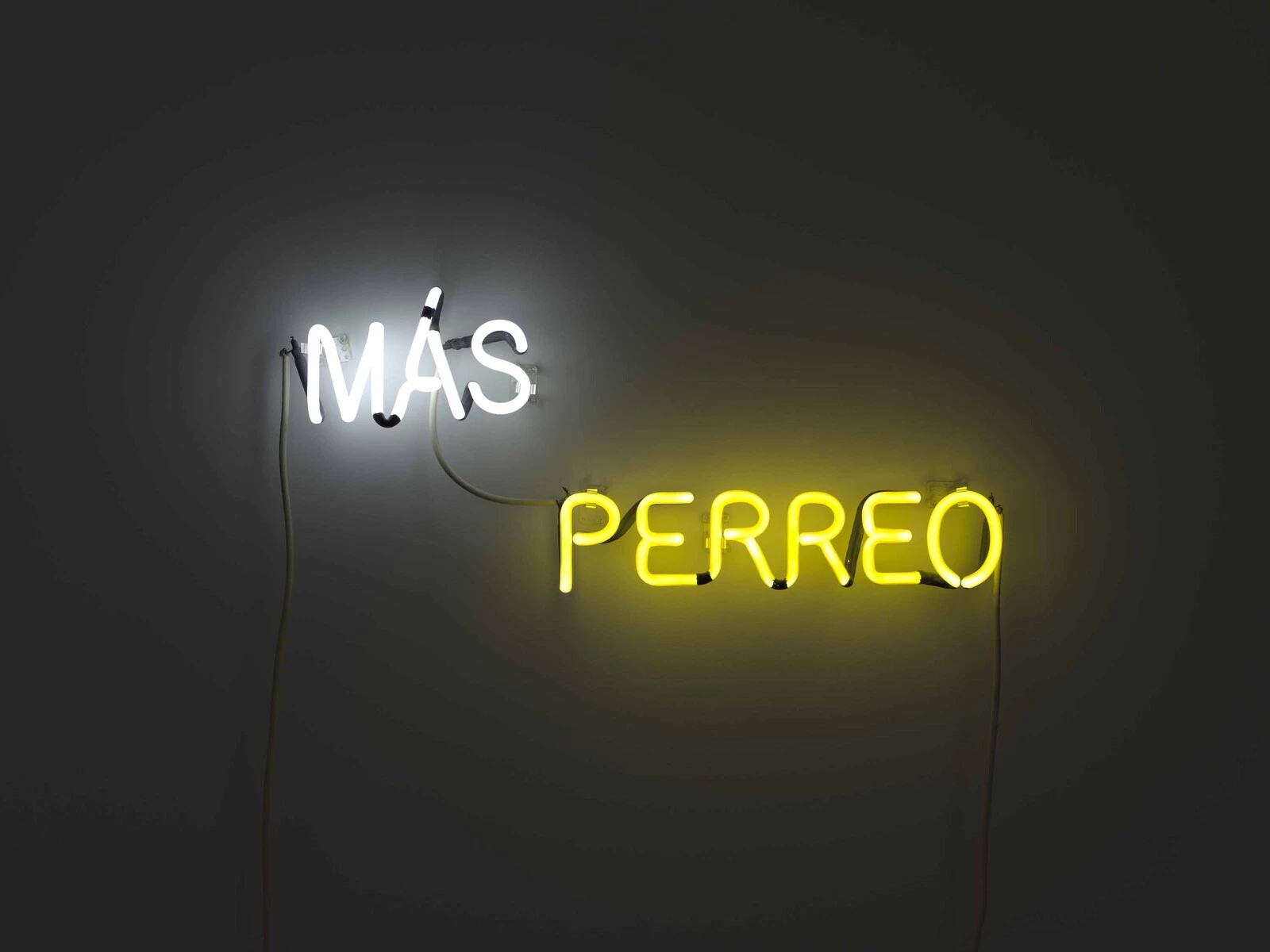
Dancing the Revolution considers music and dance as powerful tools for sexual and political liberation. The exhibition’s title is inspired by the shifting RPMs (revolutions per minute) that mark the tempo and history of Caribbean popular music, as well as by the historic events now known as the Verano del 19, or Summer of 2019, in San Juan, Puerto Rico; multisectoral protests demanding the resignation of then-Governor Ricardo Roselló. On July 17, the same day that Roselló resigned, LGBTQ+ and feminist activists led perreo combativo, or “combative twerking” on the steps of San Juan Cathedral, transforming reggaetón’s characteristic dance into a form of political protest. This reclamation of public space through dance—an act deeply rooted in dancehall history and culture—demonstrates how music and dance can serve as bold acts of collective resistance and emancipation.
Dancing the Revolution: From Dancehall to Reggaetón is curated by Carla Acevedo-Yates, former Marilyn and Larry Fields Curator and Director of Curatorial Initiatives, with Cecilia González Godino, former Marjorie Susman Curatorial Fellow, Iris Colburn, Curatorial Associate, Nolan Jimbo, Assistant Curator, and nibia pastrana santiago, Curatorial Consultant. The exhibition is designed by SKETCH | Johann Wolfschoon, Panamá.
Featured Artists
Jean-Michel Basquiat
Adrian Boot
Everald Brown
Aïda Bruyère
Carolina Caycedo
Phil Collins
Christopher Cozier
Bobby Cruz
Blue Curry
Jeremy Deller and Cecilia Bengolea
Laura Facey
Radamés “Juni” Figueroa
Denzil Forrester
Reggie Burrows Hodges
Leasho Johnson
Isaac Julien
Natalia Lassalle-Morillo
Beth Lesser
Miguel Luciano
Matthew McCarthy and Maxine Walters
Oscar Melgar
Dennis Morris
Lee “Scratch” Perry
Mallica “Kapo” Reynolds
Michael Richards
Peter Dean Rickards
Juan Rivera
Dagoberto Rodríguez
Awilda Rodríguez Lora
Pó Rodil
Eric Rojas
Josefina Santos
Storm Saulter
Garvin Sierra Vega
Jean Bernard Sohiez
Edra Soto
Jack Sowah
supakid
Alberta Whittle
Cosmo Whyte
Related Events
April 12, 2026
10:00 am - 5:00 pm
Member Hours | Dancing the Revolution
April 18, 2026
1:00 pm - 3:00 pm
Dance-Dance Reggaetón | A Discoteca for Youth
May 9, 2026
11:00 am - 3:00 pm
Family Day | Let Loose
July 7, 2026
5:30 pm - 8:00 pm
Tuesdays on the Terrace | Daniel Villarreal
July 14, 2026
5:30 pm - 8:00 pm
Tuesdays on the Terrace | Gizzae
July 21, 2026
5:30 pm - 8:00 pm
Tuesdays on the Terrace | Chillona
July 28, 2026
5:30 pm - 8:00 pm
Tuesdays on the Terrace | La Escuelita Bombera De Corazon
August 2, 2026
2:00 pm - 4:00 pm
Music Talk | Nando Boom with Juan Rivera
Related Content
This playlist was created for Dancing the Revolution: From Dancehall to Reggaetón by curators Carla Acevedo-Yates and Cecilia González Godino. It is also available on YouTube.
In this documentary created for the exhibition, scholars and artists from Kingston, Jamaica, and San Juan, Puerto Rico, discuss the power of dancehall and reggaetón as transformative music genres and cultural movements. Interspersed with footage from inside dancehalls and clubs, the exhibition video brings you into the energetic spaces that have inspired countless artists across decades.
Transcripts
English
Please note these transcriptions are machine-generated and may contain errors.
Exhibition Documentary
– You enter a dance hall and there are some rules of engagement, there are some moral codes, and you watch people arriving. Some people are gonna file in against the wall or against that perimeter space, and eventually, once the music changes, you’re gonna see a different kind of movement in the space. The attitude then becomes more lively. It’s a ritual space really, for me. The dancehall space as a performance space is entirely welcoming, and this is something about the attitude of Jamaica as well. You come to Jamaica—it’s a feel-all-right space, “Jamaica no problem,” and at some point the tone of the event shifts because people are now ready to express themselves through bodily movement, and the dancers take over.
– Dancehall normally is the voice of the people, you know, the voice of the ghetto. We are at my house, my home. I host the Kingston Dub Club at my house. It’s a form of daily news in a music form. It’s what’s happening, it’s what’s going on, you know, in the streets, in the country, in the world, because there are certain things that happen in the streets that don’t make it to mainstream media. From the beginning, it would help to build communities by generating income.
– The sound of dancehall in my translation as a non-musical person would be boop, boop, boop, boop, boop. And that’s how I describe, you know, I tell people my music, “boop, boop, boop, boop, boop.” This is the music of my childhood, this is the performance space that I became interested in. When people ask me, “What’s your favorite music?,” it’s dancehall. “Dance hall” prior to 1970 would’ve been principally used to describe a space where people go to dance, to enjoy music, to relax, to let their troubles down. After 1970, people were very clear that this was now a genre of music. So dancehall is describing a space, a genre of music, for me, a particular attitude, and it is in fact, you know, describing dance moves. Within this genre of music, there are specific dance moves that you can identify. There’s a certain language of the body. And the dance moves tell us about this language of the body, too. The emphasis on the hip girdle, the movement of the shoulder girdle, this bodily movement is characteristic of African people. And that for me is very interesting that, you know, even though we were so cut off from that history, not being able to trace our lineage because of how we were transported across that transatlantic, you know, so-called trade, we know ourselves by virtue of how we express.
– Dancehall is a very political space. The persons within dancehall culture are using what comes out of dancehall— the fashion, the dance, the music, the style—to challenge the status quo, challenge things like polite respectability, challenge conversations around sexuality, challenge how people should be seen. So the conversations around gender and dancehall will touch on things like, how do we suggest power on behalf of men? We talk about dancehall queen as women who are sexy, desirable, erotic, but also very empowered and in control of their own sexuality and have an understanding of who they are. Dancehall culture allowed far more openings for women to hold the microphone, which is the most important aspect of the music culture. They got the power of the word. Black women, large-bodied women, women with scars on their skin, and the fabulous designs, wigs, blonde wigs, red wigs and they were in the middle of the dances showcasing themselves and being picked up on the videos for people like Jack Sowah and the crew, the videographers of the time. Women were looking on and seeing this as a way of showing yourself, but also owning your sexuality and using it how you saw fit in the dance halls, and all of that comes out of the energy of working class women. Women who are dealing with the different issues that disempower them in a society. ♪ The one over there with money ♪ ♪ The one over there with money, hey ♪
– I would describe dancehall’s aesthetics as primarily eye-catching. I think that it was a tool that was used initially to make sure that people were drawn in. I never grew up necessarily having like a heavy interest in dancehall. I would say now as I’m older, I come to realize that dancehall music and the aesthetics clearly influenced even graffiti culture in America The very same thing that I was interested in all along. So there is always these combinations and connections when it comes on to the diaspora of Jamaica, which is global. The sign painting culture of Jamaica is, in my opinion, one of the most iconic things about the visual culture of Jamaica. The most famous quote I have ever heard to describe the relationship between Jamaica and music and Jamaica and politics was Edward Seaga, where he says, “It’s hard for anybody to know where the politics ends and the music begins, or vice versa.” In Jamaica, you have to think about how recent it is that individuals were freed from the bondage of slavery, left the plantations, reached to the borders of this Caribbean sea, and realized that it could go no further. So what do you send out to the world? And I think that the music was that call that went out to the world to say, okay, this is the working class struggle of this nation. But that working class struggle, if we put it in, let’s say, to a beat and we make it catchy, right? There are individuals who are going to hear it and they’re going to be entertained, but I don’t think it was just that. I think it was a Trojan horse because I think that a lot of musicians had a spiritual guidance that was walking with them, and musicians who have a spiritual calling to look out for their people, they can’t do anything but do that.
– These are the sounds that set the stage for many of the other forms that we talk about. For example, the dembow in Dominican Republic, for what becomes reggae en español de Panama, and reggaetón, you know, going to New York, the Bronx, and coming back to Puerto Rico and then coming forward as reggaetón. So we claim reggaetón. It’s dancehalltón. Say that very clearly.
– There is invested in dancehall, this DNA, this anatomy of performance, and that spectacle is important because a lot of people in their daily lives are not visible. Mostly these people are invisible, you know? But once you go into a dancehall space, depending on your skill, depending on whether you are the DJ, a dancer, or whatever, your role, you become visible in a dance hall. I think what you need to perrear is just motivation. You need to anchor your body weight on the floor or the wall or a bed or a chair, but some kind of surface. A lot of times, a circle happens and there’s someone dancing alone or with a partner, pressed up against the wall in the dark, like Tego’s song says. I think it really lets you express yourself. Reggaetón has a unique sound, because you don’t need to know what reggaetón is to dance to it or enjoy it. If you play that music for a two-year-old, the kid will start moving without even knowing the song. But behind that is the clave of reggaetón, and it’s this… Besides being a music genre, it’s something typical of Puerto Rico. It’s a Puerto Rican sound, a creole sound, something that can bring joy, and offer many experiences, and also Puerto Rican history, I think. That’s how I see it. In terms of music, I’d describe reggaetón as a direct derivative of Jamaican dancehall that was adapted, so to speak, in the Panamanian style, but above all Puerto Rican. The most famous dance move is perreo. I mean, the point is to get the booty moving on the dance floor. I love that it makes me want to shake my ass. I love it. I really feel like, in my own exploration of my gender identities and so on, for me, it’s not tied to anything specific. It’s tied to my body, to how the music makes me feel, and I feel like I reclaim a lot of my own sexuality when I’m perreando. I like how it makes me feel, period. When we started this in the nineties, it was taboo. They’d fine you for listening to reggaetón in the car. The police would stop you and give you a $500 ticket. They didn’t allow explicit lyrics on the radio. There was a clear stigma that everyone understood that it was from the hood, the projects, the street, and too explicit to be mainstream or part of Puerto Rico’s official culture. Our youth is dying, our future is dying on us. Enough already! Pedro Rosselló, iron fist against crime. My parents wouldn’t let me listen to it at home. I remember one time in first grade, I came home singing, “I want the full package. What? Pussy, ass, tits.” My mom was shocked, like, “What the hell are you singing? Who taught you that?” And the news was talking about getting rid of that dirty reggaetón, the plague, we were like a plague that was everywhere, in every paper, on the news, every story was bad for the underground genre. But I already had an album ready. And, man, I took that record to stores and it said, “Clean Lyrics.” I put the little sticker saying it didn’t have explicit lyrics. And that’s how “Close Your Eyes Tight” was born. Like, my memory of watching older reggaetón videos is that they were set in these mansions with all the video vixens in swimsuits, in bikinis, in thongs. The whole aesthetic was like lots of opulence, lots of flexing. And it really caught my attention. It seemed super fun to me. I think historically, reggaetón dancing has also been attacked by certain conservative tendencies and oppressive forces that have existed throughout the history of the Caribbean and of Puerto Rico, and that unfortunately have a racist, sexist, and homophobic legacy. So when you see different generations now, mainly young people and those of us who are still young, people who free their bodies through this rhythm, they’re pushing for a, you could say, a new Puerto Rico and a new way of socializing. And it’s also a way of asking, “Where do these imposed rules come from?” Like the government, patriarchal discourses, or discourses influenced by the Church with a capital C. Because there’s a problem in Puerto Rico that Church and State are not separated. The Verano del ’19, also known as “Soberano,” was a series of mass protests that arose after CPI published this Telegram chat, which was a private chat that Ricardo “Ricky” Rosselló had at the time with his cronies, all men. Some of them worked for the government and others in the private sector. People started reading it, and what they found was dismissal, insults, disrespect, and mockery of the entire Puerto Rican people. So all this started with plena music and marches and dances, which is what usually happens here in Puerto Rico. But then it evolved, and people came together to do yoga, But then it evolved, and people came together to do yoga, horseback rides, bike rides, motorcycle meetups, ATVs, kayaks out on San Juan Bay. The Puerto Rican people fully tapping into their creativity. How many ways can we tell this guy to leave? Where was I? Yeah, for sure, I was there. I was there. I walked a lot, got a lot of sun, had a lot of rough moments, threw bottles. It was also a moment that allowed me to meet many other people with really similar motivations to mine, but with completely different backgrounds. And I learned from those people too. I spent time with a lot of people who I never would have spent time with if we hadn’t gathered in a space like that. I feel like it’s been one of the most recent moments in Puerto Rico’s history that has brought people together from every corner of the country and every generation. The night they called for a Perreo en La Fortaleza, or Perreo Combativo, as the queer crew called it, to perrear on the steps of the Old San Juan cathedral. There were other simultaneous protests that night, because it was the night to perrear in Old San Juan. So crazy that it was the night when Ricky announced his resignation in a recorded message, because he couldn’t even do it live. And the Puerto Rican people were there in the diaspora and watching on TV, with Jorge Rivera Nieves saying… What did he say? The intense perreo has just begun. “The intense perreo has just begun.” For me, it’s a full circle moment because in the nineties, Ricky Rosselló’s father, Pedro Rosselló, went after the rappers, went after the underground scene, censored people for listening to that music. There was a whole campaign against crime that criminalized underground and reggaetón and rap artists, and that’s a whole historical moment. And 18 years later, his son gets kicked out by the Puerto Rican people the night we were dancing perreo at La Fortaleza.
The Dutty Gyal Show
– In a moment, we’ll move on to today’s topic with our PASA PASA segment. Report by: Made the Original.
– Breaking news. A scandal on par with Vybz Kartel’s 2011 incarceration is rocking the hip-hop world. Bounty Killer and Elephant Man are each claiming credit for creating “Blood Online.” Who’s telling the truth? Fans are in shock. Many are still deeply traumatized by the last altercation between Bounty Killer and Beenie Man in ’93.
– Honestly, things are a little tense, though.
– This could get out of hand, guys. You can already see people splitting into factions, taking sides. It’s all turning into a political issue.
– But anyway, we were there to dance, after all. We weren’t there to stress out.
– The government is keeping quiet about the Intercade, but we’re following it closely. Stay tuned. That was the latest from Enzole, exclusively on Duttygyal TV.
Desire Lines
– [Music playing]
– [Murmuring]
– …a choice to detach from the way of possession, a choice to be free.
– Without dismissing the very real existence of homophobia in Jamaica, we wanted to highlight the fact that LGBTQ people in Jamaica were behaving in ways that made it clear to those willing to look that we should move past anti-gay and anti-trans sentiment to focus on the LGBTQ people as actors, not simply acted upon.
– Because our story is migrants from the Caribbean from the African continent into North America or into Europe is different to say our African-American siblings, right? Because there is that narrative of migration. So we leave the Caribbean in the ’50s, ’60s, ’70s, we come to these spaces, and not only do we create life, then we have to create queer life within there as well. Our narratives aren’t just always a struggle, they’re of celebration, they’re of love, they’re of party, they’re of falling in and falling out with people, because this is what makes us richer as a community. It’s our history. Let’s start understanding it.
– We born inside Caribbean bush, resurrected submerged, flamboyant Salt water blessed. We been here a long time blissfully queer. We whose bodies have been testing grounds for other people’s litmus of being human. We have a right to redefine our bodies, our desires, our genders, our sexualities through ancestral knowledge, reshaping what was submerged and hidden, what is in our blood.
– LGBTQ is not my language. It’s not Ewe. It’s not Twi. It’s not Fanti. It’s English. We have existed before the world was created. Queerness is the origin of the universe.
– Given the context of the conversation you folk are having this weekend around Dancehall, Bashment, and the way that we will connect, is that sometimes the racist kind of ideas that club promoters or management have has meant that we are not able to be in those big spaces, not to play a particular type of music because it’s either A, perceived as being homophobic because of some of the problematic history, or B, it will attract a particular crowd of people that we don’t want in our space. What was beautiful about The Vox is it brought together all of these various strands. It welcomed dancehall queens, club kids, bashment boys, homo thugs. Everybody was welcome in that space. And what was amazing was that towards the end of the night, it would really turn into a dancehall space, so there was lots of spinning on the heads and shaking out and turning it out, and they were known for it.
– I think one of the things that we don’t recognize is that queer people really love dancehall music. A friend of mine who’s now the executive director at J-Flag had said the only time he really feels queer and truly Jamaican is when he’s listening to the dancehall music.
– I was gonna bring up Carla Moore’s work. She says that the dancehall is assumed to be so heterosexual that queer men can actually be in that space and do things that in another context might be considered queer, but it won’t be considered queer, because how could any queer stuff be happening in this super-straight space?
– As a queer man yourself, in Jamaica, I mean, you say you love the controversy of dancehall. What are your experiences with those spaces?
– For me, I think the queer spaces don’t play the songs that I like, you know, all the violence, all the, you know, they tend to play the more like Spice and stuff, you know, about wining and gyrating and stuff, which is nice, but I want to hear the hardcore thing. I want to hear about killing and scamming and, you know, all that kind of thing, all the problematic stuff.
– I’m not sure if there’s a question or comment. I grew up in Martinique, in the Caribbean, so till my 22, and the dancehall for me had a very horrible influence on my life. It’s been hell because of dancehall. I’m feeling that it is glamorized also, the way you’re introducing it a little bit. So I want to remind that, that queer people are suffering concretely because of this music also.
– How do we think about the Caribbean diaspora communities that take up murder music as the true essence of who they are?
– It’s hard to stay on the outside of dancehall and understand it. You have to be in it, and you have to be in it to experience it, because the music is speaking to the realities of the average Jamaican. Yeah, that’s the truth right there.
– I see dancehall connecting to indigenous, some indigenous songs, which I refer to as taboo breakers. Because it is only within these songs that you can really step on taboos, that you can really say things that would not be said on an ordinary day.
– As somebody who loves dancehall and talk about gay rights movement, Jamaica is still a very, very much difficult place for many, many LGBT people. And you just need to talk to the people who need to leave the country to truly understand.
– [Music playing]
– Buenos Tardes. Bienvenidos a mi programa. Hoy tenemos un invitado especial. Él es Jair Luna.
– Jair, sabemos que es bailarín, coreógrafo, colombiano, cartagenero. Cuéntanos un poco más de ti.
– [Jair] Bueno, yo me formé dentro de una compañía de danza contemporánea y dentro de la la ciudad de Cartagena de Indias, que es como una ciudad muy emblemática. Y bueno, una ciudad de muchas contradicciones, de muchos contrastes, de muchos contrastes, donde me formé dentro de esa compañía.
– ¡Qué interesante! ¡Qué interesante, Yair! Bueno, también sabemos que te interesan tópicos y temáticas queer, ¿no? Qué interesante, qué fascinante, qué fascinante tu trabajo, Yair. También lo sabemos de muy buena fuente que vas a Berlín. ¿Por qué Berlín?
– [Jair] For us, our understanding of queerness—it’s like not an identity, but like you can never be queer because queer is always a refusal of an identity, of always slipping away, of not being in a box.
– There’s more here for the, for the [unaudible].
– Desde fuera. Quiero formar parte de este lugar para vivir fuera del agua. Cuando me quiera explorar, sin importer.
– I’ve been thinking about the combination of knowledge production and sound system practice and how they are gendered and how knowledge production and masculinity construction often go hand in hand, how they co-constitute each other.
– I think the question of knowledge production depends on who you think is canonical in producing it. Queer trans people are always producing knowledge and sharing knowledge for survival.
– Really grateful for you to also highlight all of the women, non-binary people, because people like Aiyin or or DJ Paulette, or Marcia Carr, are people who have been foundational in us being able to even think about spaces for women and being able to say, actually, we don’t have enough room for us to just exist.
– How do we become included in spaces which don’t really understand us, don’t like us, although we have this shared unity in terms of the music? Music, dancing, celebrating, eating, but when it comes down to our sexuality and how we express our sexuality, it can become dangerous for us. And I worry about my visibly trans femme or drag artists who perform, because how do we keep those people safe when we know the police, they don’t see sexuality, they see color?
– Living in Jamaica and doing this kind of work, a lot about challenging internalized fear in the community. It was such a tipping point, 2015, August 1st, the morning of Emancipation Day, thinking about the ancestors who would have also been celebrating their liberation in their own way, and here we are hundreds of years later at Emancipation Park attempting to do the same thing.
– I wouldn’t say it’s bravery. I see myself as somebody in waters drowning and I just have to fight on to survive. So it’s not about bravery. Why do we want to be visible? The invisibility of our existence is the reason we are fighting today against homophobia because the claim is that we never existed and it’s a new culture. So sometimes these visibilities are important, but we have to acknowledge that it’s an extreme vulnerability, and some of us are just willing to die for it. Otherwise, others will not get the freedom.
– Thank you.
– I’m named Lady Blake Ophelia in honor of the newcomers. My mother, Queen Makilia, welcomed them in peace and one love.
– [Music playing]
Territories
– A new context for the political struggle of the disseminated mass of unwanted labor is provided by the streets of civil society. Its territories, the contradictory spaces which are the geographical expressions of the city. The territories of class, labor, race, sex, relations. Territory, the holding of one class’s privileges in a declining system of crisis.
– Territories of desire, the control of one’s space.
– Carnival.
– Territories of resistance. Sound systems. Territories of surveillance. Territories of sexual expressions. The contradictory spaces. The geographical expressions that cohabit a city. The territory of the look. Territories of the body conflicting with dominant demands. Behind each conflict there is a history. A herstory. We are struggling to tell a story, a herstory, a history. Of cultural forms specific to Black people.
– Cultural forms specific to Black people.
– The decay and decline of Britain’s major industrial urban centers is one of the baselines mapping the contours and terrain of race and class as they figure out the repertoire of image of crisis. So we begin by specifying Notting Hill, one of the sets of chains—archipelagos—of the colony society, the ghettos created by the forces of labor market and housing, private or public sector, the domain out of which communities have arisen, and events, like Carnival.
– [News anchor] This is London. BBC World Service. In 1959, after the Kelso Cochrane killing, Claudia Jones and Francis Ezrico led a deputation of West Indian organizations to the Home Secretary. And in the same year, to get the taste of Notting Hill out of their throats, the West Indian Gazette launched the first Caribbean Carnival in St. Pancras Town Hall.
– Cleansing, to get the taste out of our throats, catharsis and cultural struggle. Where to Where should we begin to trace the beginning of this Black social esthetic event? How far should we go to begin our story, a history of Carnival? To 1976? To 1966? Or to 1959? Or should we turn to its origins in the Caribbean, in Africa, in ancient Babylon, centuries before Christ? We are struggling to begin a story. The only choice we have is to struggle. Desires. It is not read. Or learnt. But practiced by my mother’s hand and her mother’s hands who brought the wealth to this oh so glorious land. We are struggling to begin a story, a history, a herstory of cultural forms specific to Black peoples, a history, a herstory of its creation and recreation in the diaspora.
– [Woman speaking] Conventional documentaries always return us to the Caribbean, to Trinidad in particular, to account for the meaning of Carnival today for Black people in Britain. We are routinely taken into a past, shown images of the plantocracy. We are told of the ambiguity of mock revolutions.
– We are told the mimicry and parody of the planter class and their manners. What do these conventional stories, documentaries, add up to? The same old story. A string of stereotypes about Black culture, carnival is neutralized and framed, contained as aesthetic spectacle.
– [Newscaster] Carnival, an export from the Caribbean island of Trinidad, burst upon the streets of London in 1974 in a fashion that startled everyone. Before that, a more sedate and community-based form of carnival existed. Throughout the ’60s, people were becoming familiar with steel drums, and small groups were forming bands and playing in clubs and bars. It was around 1965 that Carnival first took to the streets as a mini children’s event. Names like Russell Stirling, Vernon Fellows, and an English lady called Ronnie Laslett were some of the people responsible for planting the seeds for today’s national spectacle.
– And because this music and dance was so misunderstood, for the music was based on tonal scales and dancing on choreographic traditions entirely outside the white observer’s experience, not forgetting the necessary assumption that Blacks, since they were savage, could produce no philosophy that reached above the navel, the music was dismissed as noise, their dancing as a way of or to sexual misconduct and debauchery. On the other hand, the political function of Black music was quickly recognized by the masters, hence banning of drumming or gatherings where drumming took place, often on the excuse that it disturbed the white neighborhood.
– They do actually nowadays shut off the carnival quite quickly, quite early, and sort of tell the sounds to stop playing.
– We’ve got experience with that. Yeah, we want to deal with it. We are against the amount of police they have in Carnival since 1976, because we’ve seen Carnival before 1976, and it’s because of the police in 1976 which caused all them riots. The police attitude, for one, right, is aggression against sound systems on the corners, right, because they see any gathering of young Black people as threatening, right. So they’re always harassing people around the sound systems, right? Now for us now, on our truck and playing for our band, they want to tell us where we should go and where not to go and when to turn off and when not to turn off, right? So I think 1980, we said, well, we ain’t coming off the streets at 6 o’clock or 8 o’clock as they wanted, and we wouldn’t turn down the amplifiers or turn down the… and what we did was just play the music and let the people dance through the police cordon. Yeah.
– And I think after that, you like that music and you like that groove, but you don’t like the politics doing too. And you’re also white, and if I’m being real white with you guys, y’all don’t know how I feel.
– The point was that the police try to establish authority, and when there was a backing and there was a support for the music going on, and we did bust the police cord in that year because they couldn’t stop— they can’t stop a lorry coming at you, you know what I mean? They have to let it go through. They can’t stop people dancing through there, so they had to let it go through. So all the youths were happy and cheered for that. But I mean, generally, I mean, one year also the police tried to stop us from coming to Carnival because they said that The only way you’re going to come into Carnival is if you had a pass for people to enter Carnival. So they tried to say to set up a pass system where you—to enter Carnival you have to have a pass, right? And we said we ain’t got no pass and we don’t, you know, we’re not going to bring no passport, we just come to participate and that is it. So it went through in the end.
– So when you play out normally, I mean, do you think you have a different relationship with the police or is it the same?
– Same thing. We don’t have no relationship with the police.
– [MC speaking]
– We are struggling to begin a story, a his story, a her story of cultural forms specific to Black peoples, a his story, a her story of its creation and recreation in the diaspora.
– Colonial fantasy requires a fixed image of the Black person or the other, but it is based on a complex kind of fixedness. The other signifies both fear and desire and disorder due to the way in which Blackness evokes fear and fantasy on behalf of white society.
– It was never a question of passing. It was a question of hiding behind Black and white perceptions of who we were, who they thought we were. Tropics, plantations, calypso, cricket. We were the people with the musical voices and the coronation mugs on our parlor tables. I would be whatever figure these foreign imaginations cared for me to be. I would be whatever figure these foreign imaginations cared for me to be. It would be so simple to let others fill in for me, so easy to startle them with a flash of anger when their visions got out of hand, but never to sustain the anger for myself. It could become a life lived within myself, a life cut off.
– I know who I am, but you will never know who I am. I may in fact lose touch with who I am. I hid from my real sources, but my real sources were also hidden from me. Now it is not a question of relinquishing power.
– It was never a question of passing. It was a question of hiding behind Black and white perceptions of who we were, who they thought we were. Plantations, calypso, cricket. We were the people with the musical voices and the carnation marks on our parlor tables. I would be whatever figure these imaginations cared for me to be. I would be whatever figure these foreign imaginations cared for me to be. It’d be so simple for me to startle them with a flash of anger when their visions got out of hand, but never to sustain the anger for myself.
– A new context for the political struggles of the disseminated mass of unwanted labor is provided by the streets of civil society. Its territories, the contradictory spaces which are the geographical expressions of the city, the territories of class, labor, of race-sex relations. Territory, the holding of one class’s privileges in a declining system in crisis. Territory for the control of one’s space. Carnival. Territories of resistance. Sound systems. Territories of surveillance, mind, territories of the body, territories of sexual expression conflicting with dominant demands, the contradictory spaces, the geographical expressions that coinhabit a city, the territory of the look. Behind each conflict there is a history, a herstory. We are struggling to tell a story, a herstory, a history of cultural forms specific to Black peoples.
– [Singing] Way of righteous men. Against us is the power of police. The shameless lies that men have told will evermore be paid in gold. Against us is the power of the law. Police know how to make a man guilty or an innocent.
– [Singing] Against us is the law with its immensity of strength and power. Against us is the law. Police know how to make a man a guilty or an innocent. Against us is the power of police.
– [Singing] Against us is the law with its immensity of strength and power. Against us is the law. Police know how to make A man, guilty or innocent. Against us is the power of police. Against us is the racial hatred and the simple fact that we’re poor.
– A new context for the political struggles of the disseminated mass of unwanted labor is provided by the streets of civil society, its territories, the contradictory spaces which are the geographical expressions of a city. The territories of class, labor, race, sex relations. Territory: the holding of one class’s privileges in a declining system of crisis.
Bom Bom's Dream
– Give thanks and praise to Almighty God. Yeah, Bom Bom is the best dancehall queen in Japan. Yeah, he’s dreaming. Yeah, because he love dancing, so he is dancehall queen. He many, many come Jamaica for dancehall queen. Yeah, so me have to big up Bom Bom every time. So natural for him. Yeah, blessed love. All right.
– Okay, seriously, Bom Bom, my wife. She going to be my wife, but no, she is my girlfriend. Me going to married her. Soon.
– Yo, you know, say, chop up the video.
– Shelly, Bom Bom.
– Hello, my lady, Bom Bom.
– Do you dreaming about me? Do you love me, baby? You can’t leave me.
– Me love you, my baby.
– You treat me so good, you see. You treat me like a nice baby.
– Okay, Bom Bom, wake up from that dream. You stop dreaming now. You in a reality. Reality come to you, so wake up. Don’t dream.
– You know where you from? You know, you know. What’s your name?
– Bom Bom.
– [inaudible]
NEGRILÉON NEWS NETWORK
– Hurricane Storm was that storm, and the second one is Gilbert.
– The track will take the system closer and closer to Jamaica by Friday morning. This is tomorrow morning at about 8 o’clock. We expect that the system will be just off the southeast coast. Getting ready to make its way across the island by midday.
– Volcanic rock meets the sea, where soul surfers make waves on right beats. You’ll find me—
– This time, this place has done a lot for me. A kind of thing happens when the beauty of a place overwhelms you.
– 1, 2, 3, 1, 2, 3, 1, 2—
– The young sun hung low in the sky over Montego, a burnt glow through the blunt smoke. Skiddly waddly diddly, more bars than Barrington Levy. If he was a barrister on Barris Street with a double barrel shot, he’d hit him under the baby seat of the Honda, shot the maître d’, and dipped in the alleyway where scallywags lay their head to sleep. Clip my fingerprints off my fingers and burn my memories, everything from 21st September.
– Real Philly Blunt
– The director will now take a draw.
– No rent, no lease, we just own. Braces off, teeth with full crown. Stick a pin, it’s getting sociological. Trying to judge a book by the curling of its follicles. Admit it, I’m phenomenal. My pheromones are panic-inducing. I’m an anomaly, but you can’t study me. RFI, don’t fuck around with my melody.
– Daddy, it’s the strongest breeze you see from inside.
– I saw one wave that came in and actually took the one cottage over there in one pour.
– In one wave?
– Only that you’re watching this one coming and going down and you’re thinking about each wave that comes up takes away the foundation more and more. Because we had a whole island.
– No, this is dangerous. No, this is too much. And we had the 5 dogs inside, but they were good. Yeah, our dogs. Whoa!
– Till then I walk lightly, stamp where me stamp, envision what I might be. Come if the moon and the stars are aligning, reason or rhyme, it’s all about timing, initiative and divine guidance. Used to have a spear gun firing a trident, used to run boat with the youths on a Friday, used to have the world at my feet, I was childish. Now me just chop through the seas like a pirate, smooth like Pyrex.
– I just, I just miss having time with you and just being fun and silly and talking and chatting. I can’t wait. I can’t wait. Let’s hear the voice of God and be gracious and thankful to him. Amen.
– Amen. Thank you very much, Pastor Al Miller and Pastor Finn, for coming by, leading our nation into prayer. And we ask that, you know, the saints right across Jamaica will continue to pray. And don’t be, you know, even doubting that God can’t. He can.
– He can. And he has already begun to weaken the storm.
– Yeah, man, when I tell PJ, say we are starving, man. We want rice, we want sugar, we want bulgur, we want flour, we want chicken back. Yeah, yeah, yeah, man. Water, you know, have to drink rum.
– So right now it look like Father God put little Amazon in that storm and all the trees are dead right now. It’s like a drought right now. Day is so hot, you know what I’m saying? What you say? Me say, me say the farming going to be on the land, but the harvest going to be in the sea.
– But no fish come down, no fish. We can’t go up on the road, go party. And when we go, go party, the girl, and we live more out the town, we have generator and tank. But while in town, because they know, so we don’t have much We have this one that say, when trouble take man, picnic boot fit him. Hey, when a man is in trouble, he will attempt the impossible.
– Picnic boot fit him. Hey, now I’m going to tell you some verses.
– The nice thing— Nimble is the method, steady is the pace, studying the greats, try to emulate. Plenty upon my platter, plenty upon my plate, push play, same way, can’t hesitate. Float on the beat like the breeze in Anato Bay. Words carry weight, yet defy gravity, so said my queen when we reasoning deep in search of The meaning of tensions between us. Evenings recede, the sun’s gone, seeking perform at my peak every week and every weekend.
– How many years did we spend staring at the stars until we saw a future in them? What do we regard? Intuition or the will of the mob? Plenty upon my platter, plenty upon my plate. Daddy threw me in the sea, said sink or swim.
– Every time me win, have to think of him. Mama saw the promise in me vividly. When manifesting, have to think of she-heart-mind-spirit divine symmetry.
– Beatrice Wilson, Aunt Bee, died leaving 11 children, 29 grandchildren, 25 great-grandchildren, 2 sisters, other relatives and friends.
– Cigarette, cigar, cigar. Cigarette, cigar, cigar. It’s gotta be hot, hot, hot, hot, hot, hot. What a show.
Español
Tenga en cuenta que estas transcripciones han sido generadas por una máquina y pueden contener errores.
Documental de la exposición
– Entras a un dance hall y hay algunas reglas de comportamiento, hay algunos códigos morales, y observas a la gente llegar. Algunas personas se van a colocar contra la pared o contra ese espacio perimetral, y eventualmente, una vez la música cambia, vas a ver un tipo diferente de movimiento en el espacio. La actitud entonces se vuelve más animada. Para mí, este es realmente un espacio ritual. El espacio del dancehall como un espacio de performance es completamente acogedor, y esto es algo sobre la actitud de Jamaica también. Vienes a Jamaica, es un espacio de sentirse bien, “Jamaica sin problemas”, y en algún momento, el tono del evento cambia porque la gente ahora está lista para expresarse a través del movimiento corporal, y los bailarines toman el control.
– El dancehall normalmente es la voz del pueblo, ya sabes, la voz del gueto. Estamos en mi casa, mi hogar. Organizo el Kingston Dub Club en mi casa. Son las noticias diarias en formato musical. Es lo que está pasando, lo que está ocurriendo, ya sabes, en las calles, en el país, en el mundo porque hay ciertas cosas que suceden en las calles que no llegan a los medios de comunicación convencionales. Desde el principio, ayudaría a construir comunidades al generar ingresos.
– El sonido del dancehall en mi traducción como persona no musical sería boop, boop, boop, boop, boop. Y así es como describo, ya sabes, Le digo a la gente, “mi música, boop, boop, boop, boop”. Esta es la música de mi infancia, este es el espacio de performance que me interesó. Cuando la gente me pregunta “¿cuál es tu música favorita?”, es el dancehall. “Dance hall” antes de 1970 se habría utilizado principalmente para describir un espacio donde la gente va a bailar, para disfrutar de la música, relajarse, dejar sus problemas atrás. Después de 1970, la gente tenía muy claro que ahora esto era un género de música. Así que dancehall describe un espacio, un género de música, para mí, una actitud particular, y de hecho, ya sabes, describe movimientos de baile. Dentro de este género de música, hay movimientos de baile específicos que puedes identificar. Hay un cierto lenguaje del cuerpo, y los movimientos de baile nos cuentan sobre este lenguaje del cuerpo también. El énfasis en la cintura pélvica, el movimiento de la cintura escapular. Este movimiento corporal es característico de la gente africana, y eso para mí es muy interesante que, aunque fuimos tan desconectados de esa historia, sin poder rastrear nuestra ascendencia debido a cómo fuimos transportados a través de ese transatlántico, el llamado comercio, nos conocemos a nosotros mismos por la forma en que nos expresamos.
– Dancehall es un espacio muy político. Las personas dentro de la cultura dancehall están usando lo que sale del dancehall, la moda, el baile, la música, el estilo, para desafiar el status quo, desafiar cosas como la respetabilidad educada, desafiar conversaciones sobre la sexualidad, desafiar cómo la gente debería ser vista. Así que las conversaciones sobre género y dancehall tocarán temas como, ¿cómo sugerimos poder en nombre de los hombres? Hablamos de la reina del dancehall como mujeres que son sexys, deseables, eróticas, pero también muy empoderadas y en control de su propia sexualidad y tienen un entendimiento de quiénes son. La cultura dancehall permitió una mayor apertura para las mujeres para tomar el micrófono, que es el aspecto más importante de la cultura musical. Obtuvieron el poder de la palabra. Mujeres negras, mujeres de cuerpo grande, mujeres con cicatrices en la piel, y los fabulosos diseños, pelucas, pelucas rubias, pelucas rojas, y estaban en medio de los bailes exhibiéndose y siendo captadas en los videos, y así personas como Jack Sowah y su equipo, los videógrafos de la época. Las mujeres estaban observando y viendo esto como una forma de mostrarte a ti misma, pero también de poseer tu sexualidad y usarla como mejor te pareciera en los salones de baile, y todo eso surge de la energía de las mujeres de clase trabajadora. Mujeres que están lidiando con los diferentes problemas que las desempoderan en una sociedad. ♪ La de allá con dinero ♪ ♪ La de allá con dinero, hey ♪
– Yo describiría las estéticas del dancehall como principalmente sugerente. Creo que fue una herramienta que se usó inicialmente para asegurarse de que la gente se sintiera atraída. Nunca crecí necesariamente teniendo un gran interés en el dancehall. Diría que ahora, siendo mayor, me doy cuenta de que la música dancehall y las estéticas claramente influyeron incluso en la cultura del grafiti en Estados Unidos. La misma cosa en la que siempre estuve interesado. Así que siempre hay estas combinaciones y conexiones cuando se trata de la diáspora de Jamaica, que es global. La cultura de letreros pintados en Jamaica es, en mi opinión, una de las cosas más icónicas sobre la cultura visual de Jamaica. La cita más famosa que he escuchado para describir la relación entre Jamaica y la música y Jamaica y la política fue de Edward Seaga, donde dice: “Es difícil para cualquiera saber dónde termina la política y comienza la música, o viceversa”. En Jamaica, tienes que pensar en lo reciente que es que los individuos fueron liberados de la esclavitud, dejaron las plantaciones, llegaron a las fronteras de este mar caribeño y se dieron cuenta de que no podían ir más allá. Entonces, ¿qué envías al mundo? Y creo que la música fue ese llamado que salió al mundo para decir, bien, esta es la lucha de la clase trabajadora de esta nación. Pero esa lucha de la clase trabajadora, si la ponemos en, digamos, a un ritmo y la hacemos pegajosa, ¿verdad? Hay individuos que la van a escuchar y se van a entretener, pero no creo que fuera solo eso. Creo que fue un caballo de Troya porque creo que muchos músicos tenían una guía espiritual que caminaba con ellos, y músicos que tienen un llamado espiritual para cuidar de su gente, no pueden hacer otra cosa más que eso.
– Estos son los sonidos que preparan el escenario para muchas de las otras formas de las que hablamos. Por ejemplo, el dembow en República Dominicana, para lo que se convierte en reggae en español de Panamá y el reggaetón, yendo a Nueva York, el Bronx, y regresando a Puerto Rico y luego avanzando como reggaetón. Así que reclamamos el reggaetón. Es dancehalltón. Dilo muy claramente.
– Hay inversión en dancehall, este ADN, esta anatomía de la performance. Y ese espectáculo es importante porque muchas personas en su vida diaria no son visibles. Principalmente estas personas son invisibles, ¿sabes? Pero una vez que entras en un espacio de dancehall, dependiendo de tu habilidad, dependiendo de si eres el DJ, un bailarín, o el papel que sea, te vuelves visible en un dance hall. Yo creo que para perrear lo que tienes que tener es ganas. Debes tener el peso de tu cuerpo en relación al piso o a la pared, o a la cama o a la silla, pero a alguna superficie. Muchas veces, espontáneamente, surge el círculo y hay alguien bailando solo, sole o en pareja, apretadito en la pared al oscuro, como dice la canción de Tego. Yo creo que se presta para que tú te manifiestes. El sonido del reggaetón es un sonido único, ya que no necesitas saber qué es reggaetón para tú bailarlo, para tú disfrutárselo. Si tú pones esa música a un niño de dos años, el niño se menea sin conocer la música. Pero detrás de eso, está la clave del reggaetón, que es esto… Además de un género musical, siento que es algo típico de Puerto Rico, un sonido puertorriqueño, un sonido criollo, algo que puede transmitir alegría, brindar muchas experiencias, pienso que también historia puertorriqueña. Así más o menos lo veo yo. Yo describiría el reggaetón como música, como un derivado directo del dancehall jamaiquino, criollizado, digamos, a la manera panameña, pero más que nada boricua. El baile más que nada por el que se caracteriza es el perreo. O sea, el punto es que se muevan los fondillos en la pista. Me encanta que me dan ganas de mover el culo, es algo que me encanta, es algo que siento que en mi propia exploración con mis identidades de género y etcétera, como que para mí no está atado a nada, está atado a mi cuerpo, a cómo la música me hace sentir, y siento que reclamo mucho de mi propia sexualidad cuando estoy perreando. Me gusta cómo me hace sentir, punto. Cuando comenzamos esto en los noventa, era un tabú. Escuchar música de reggaetón en el carro, te multaban, policía te paraba y te daba un ticket de 500 dólares, no permitían palabras malas en las radios. Tenía un estigma claro y entendido por todo el mundo, de que era de barrio, de caserío, de calle, y demasiado explícito para ser mainstream o parte de la cultura oficial puertorriqueña. Se nos muere nuestra juventud, se nos muere nuestro futuro. ¡Está bueno ya! Pedro Rosselló, mano dura contra el crimen. Mis papás no me dejaban escucharlo en mi casa. Yo me acuerdo, en primer grado, llegué una vez a mi casa cantando: “Yo quiero la combi completa, ¿Qué? Chocha, culo, teta”, y mi mamá estaba escandalizada: “¿Qué carajo tú estás cantando eso? ¿Quién te enseñó eso?”. Y las noticias, que si sacan el reggaetón sucio, Y las noticias, que si sacan el reggaetón sucio, la plaga, éramos la plaga de todos lados, de todos periódicos, noticias, éramos todo, toda la noticia era lo peor para el género underground. Pero yo tenía un solo disco ya listo. Y, mano, yo llevo ese disco a las tiendas, decía: “Clean Lyrics”, le puse el sellito de que no hablaba malo, y ahí nació “Cierra los ojos bien”. Así como que mi memoria de ver videos de reggaetón más viejitos, esta cuestión de que eran en estas mansiones, con todas las video vixens, en traje de baño, en bikini, en g-string, la estética de la cuestión, como mucha opulencia, mucho fronteo. Y me llamaba mucho la atención, me parecía bien divertido. Creo que el baile de reggaetón, históricamente también, ha sido atacado por unas tendencias conservadoras y unas fuerzas opresivas que han existido a lo largo de la historia del Caribe, de Puerto Rico, que tienen un legado, lamentablemente, racista, sexista, homofóbico. Entonces, cuando tú ves ahora las diferentes generaciones, pero principalmente los jóvenes y los que seguimos siendo jóvenes quienes liberan el cuerpo a través de este ritmo, están apostando a manifestar, vamos a decir un nuevo Puerto Rico, una nueva manera de socializar, una manera también de decir: “¿de dónde vienen estas reglas impuestas?” Como el Gobierno, los discursos patriarcales o los discursos influenciados por la Iglesia en mayúscula, que hay un problema en Puerto Rico, donde la Iglesia del Estado no está separado. El Verano del 19, también conocido como “Soberano”, fueron una secuencia de protestas masivas que surgen a raíz de la publicación por parte del CPI del Telegram, que era un chat privado que tenía para ese entonces el exgobernador Ricardo “Ricky” Rosselló, con sus secuaces, todos hombres, algunos que trabajaban para el Gobierno y otros que eran de la empresa privada, la gente comienza a leerla y lo que hay ahí es un rechazo, insulto, falta de respeto, burla al pueblo puertorriqueño completo. Entonces, todo esto empezó con plenas y marchas y bailes, que es lo que usualmente pasa aquí en Puerto Rico. Pero después se fue transformando y hubo convocatorias para hacer yoga, cabalgatas, bicicletadas, junta de motoras, four track, los kayaks por la Bahía de San Juan. El pueblo puertorriqueño explotando su creatividad al máximo. ¿De cuántas maneras le podemos decir a este tipo que se vaya? ¿Dónde estaba? Estaba ahí, sí, full, estaba ahí. Estuve ahí, caminé mucho, cogí mucho sol, pasé muchos malos ratos, tiré botellas. Fue un momento que aproveché también para conocer muchas otras personas con muchas motivaciones iguales a las mías, pero con background completamente diferentes, y poder aprender también de esas personas, compartí con muchas personas que yo en mi vida creo que hubiese podido compartir si no nos hubiésemos reunido en un espacio como ese, porque siento que ha sido de los últimos momentos históricos en la historia de Puerto Rico que ha pasado, que ha unido a personas de todas las puntas del país y de todas las generaciones. La noche que se convoca Perreo en La Fortaleza o Perreo Combativo, que así lo convocó una corilla cuir para perrear en las escalinatas de la catedral de Viejo San Juan, y hubo otras convocatorias simultáneas esa noche, porque era la noche para perrear en Viejo San Juan. Qué loco que esa noche fue fue la que Ricky anunció su renuncia grabada, porque ni en vivo la pudo hacer. Y el pueblo puertorriqueño, ahí en la diáspora y a través de los televisores, con Jorge Rivera Nieves diciendo… ¿qué es lo que dice? El perreo intenso acaba de comenzar. “El perreo intenso acaba de comenzar”. Para mí es un full circle, porque el padre de Ricky Rosselló en los 90, Pedro Rosselló, persiguió a los raperos, persiguió al underground, censuró a los que escuchaban música, hubo toda una campaña contra el crimen, que criminalizaba artistas del underground y del reggaetón y del rap, y eso es todo su momento histórico. Y 18 años después, su hijo lo bota el corillo puertorriqueño la noche que estábamos perreando en La Fortaleza.
El show de la muchacha sucia
– En un momento pasaremos al tema del día con nuestra sección PASA PASA. Reportaje a cargo de: Made the Original.
– Noticia de última hora. Un escándalo digno del caso que llevó a Vybz Kartel’s a la cárcel en 2011 está sacudiendo el mundo del hip-hop. Bounty Killer y Elephant Man se atribuyen cada uno la autoría del tema «Sang Online». ¿Quién dice la verdad? Los fans están conmocionados. Muchos siguen muy traumatizados por el último enfrentamiento entre Bounty Killer y Beenie Man en 1993.
– La verdad es que la cosa está un poco tensa.
– Esto puede ir muy lejos, tío. Ya se ve cómo la gente se divide, cómo toman partido. Todo esto se está convirtiendo en algo político.
– Pero bueno, al fin y al cabo, estábamos allí para bailar. No estábamos allí para complicarnos la vida.
– El Gobierno guarda silencio sobre el Intercade, pero lo seguimos de cerca. Seguiremos informando. Esto fue lo más reciente en las noticias de Enzole, en exclusiva en Duttygyal TV.
Líneas de deseo
– [Suena música]
– [Murmullo]
– …una decisión de alejarse de la mentalidad de la posesión, una decisión de ser libre.
– Sin restar importancia a la existencia real de la homofobia en Jamaica, queríamos destacar el hecho de que las personas LGBTQ de Jamaica se comportaban de una manera que dejaba claro, para quienes estuvieran dispuestos a verlo, que debemos dejar atrás los sentimientos homófobos y transfóbicos para centrarnos en las personas LGBTQ como protagonistas, y no simplemente como víctimas.
– Porque nuestra historia, la de los migrantes del Caribe y del continente africano hacia Norteamérica o Europa, es diferente a la de nuestros hermanos y hermanas afroamericanos, ¿verdad? Porque existe esa narrativa de la migración. Así que salimos del Caribe en los años 50, 60 y 70, llegamos a estos lugares y no solo creamos una vida, sino que también tenemos que crear una vida queer dentro de ella. Nuestras narrativas no son siempre una lucha, son de celebración, son de amor, son de fiesta, son de enamorarnos y desenamorarnos de la gente, porque esto es lo que nos enriquece como comunidad. Es nuestra historia. Empecemos a entenderla.
– Nacimos en la selva caribeña, resucitamos sumergidos, bendecidos por el agua salada y extravagantes. Llevamos mucho tiempo aquí, felizmente queer. Nosotros, cuyos cuerpos han servido de campo de pruebas para el papel de tornasol de la humanidad de otros. Tenemos derecho a redefinir nuestros cuerpos, nuestros deseos, nuestros géneros y nuestras sexualidades a través del conocimiento astrológico ancestral, remodelando lo que estaba sumergido y oculto, lo que corre por nuestras venas.
– LGBTQ no es mi idioma. No es el ewe. No es el twi. No es el fanti. Es inglés. Existíamos antes de que se creara el mundo. La identidad queer es el origen del universo.
– Teniendo en cuenta el contexto de la conversación que estáis manteniendo este fin de semana sobre Darts Hall, Bashment y la forma en que vamos a conectar, es que, a veces, las ideas racistas que tienen los promotores o la dirección de los clubes han hecho que no podamos estar en esos grandes espacios, que no podamos pinchar un tipo concreto de música porque, o bien A, se perciba como homófoba debido a cierta historia problemática, o B, atraerá a un tipo concreto de público que no queremos en nuestro espacio. Lo bonito de The Vox es que reunía todas estas corrientes diferentes. Daba la bienvenida a reinas del dancehall, club kids, chicos del bashment, matones homosexuales. Todo el mundo era bienvenido en ese espacio. Y lo increíble era que, hacia el final de la noche, se convertía de verdad en un espacio de dancehall, así que había un montón de giros sobre la cabeza, meneos y alardes, y eran famosos por ello.
– Creo que una de las cosas que no nos damos cuenta es que a la comunidad queer le encanta la música dancehall. Un amigo mío, que ahora es director ejecutivo de J-Flag, me dijo que el único momento en el que se siente realmente queer y auténticamente jamaicano es cuando escucha música dancehall.
– Iba a mencionar el trabajo de Carla Moore. Ella dice que se da por sentado que el dancehall es un espacio tan heterosexual que los hombres queer pueden estar allí y hacer cosas que, en otro contexto, podrían considerarse queer, pero que allí no se considerarán así, porque ¿cómo podría haber algo queer en un espacio tan heterosexual?
– Como hombre queer que eres, en Jamaica, quiero decir, dices que te encanta la controversia del dancehall. ¿Qué experiencias has tenido en esos espacios?
– En mi caso, creo que en los locales queer no ponen las canciones que me gustan, ya sabes, con todos esos violines y todo eso; suelen poner más bien cosas del estilo de Spice y demás, ya sabes, sobre quejarse y contonearse y todo eso, lo cual está bien, pero yo quiero escuchar música hardcore. Quiero escuchar cosas sobre asesinatos y estafas y, ya sabes, todo ese tipo de cosas, todo lo problemático.
– No estoy seguro de si se trata de una pregunta o de un comentario. Crecí en Martinica, en el Caribe, hasta los 22 años, y el dancehall tuvo una influencia muy negativa en mi vida. Ha sido un infierno por culpa del dancehall. Me parece que también se le da un toque glamuroso, por la forma en que lo estás presentando. Así que quiero recordar que las personas queer también están sufriendo de forma concreta por culpa de esta música.
– ¿Cómo debemos considerar a las comunidades de la diáspora caribeña que adoptan la «música del asesinato» como la verdadera esencia de su identidad?
– Es difícil entender el dancehall sin formar parte de él. Hay que estar dentro, y hay que estar dentro para vivirlo, porque la música refleja la realidad del jamaicano de a pie. Sí, esa es la verdad.
– Veo que el dancehall conecta con lo indígena, con algunas canciones indígenas, a las que me refiero como «rompedoras de tabúes». Porque solo en estas canciones se pueden traspasar realmente los tabúes, solo ahí se pueden decir cosas que no se dirían en un día cualquiera.
– Como amante del dancehall y defensor del movimiento por los derechos de los homosexuales, puedo decir que Jamaica sigue siendo un lugar muy, muy difícil para muchísimas personas LGBT. Y basta con hablar con quienes se ven obligados a abandonar el país para comprenderlo de verdad.
– [Suena música]
– Buenos Tardes. Bienvenidos a mi programa. Hoy tenemos un invitado especial. Él es Jair Luna. Jair, sabemos que eres bailarín, coreógrafo, colombiano y cartagenero. Cuéntanos un poco más sobre ti.
– [Jair] Bueno, me formé en una compañía de danza contemporánea en la ciudad de Cartagena de Indias, que es una ciudad muy emblemática. Y bueno, una ciudad llena de contradicciones y contrastes, donde me formé en esa compañía.
– ¡Qué interesante! ¡Qué interesante, Yair! Bueno, también sabemos que te interesan los temas y las cuestiones queer, ¿no? Qué interesante, qué fascinante, qué fascinante es tu trabajo, Yair. Además, sabemos de muy buena fuente que te vas a Berlín. ¿Por qué Berlín?
– [Jair] No es tanto una identidad, sino que nunca puedes ser queer, porque ser queer es siempre un rechazo a la identidad, es siempre eludirla, es no encajar en ningún molde.
– Aquí hay más información para el profesor.
– Desde fuera. Quiero formar parte de este lugar para vivir fuera del agua. Cuando quiera explorar, sin importar
– He estado reflexionando sobre la relación entre la producción de conocimiento y la práctica de los sistemas de sonido, y sobre cómo ambas están condicionadas por el género; también sobre cómo la producción de conocimiento y la construcción de la masculinidad suelen ir de la mano, y cómo se constituyen mutuamente.
– Creo que la cuestión de la producción de conocimiento depende de a quién consideres una figura de referencia en ese ámbito. Las personas trans queer siempre están generando y compartiendo conocimientos para sobrevivir.
– Te agradezco mucho que también destaques a todas las mujeres y a las personas no binarias, porque personas como Aiyin, DJ Paulette o Marcia Carr han sido fundamentales para que pudiéramos siquiera plantearnos la idea de espacios para mujeres y para poder decir: «En realidad, no tenemos suficiente espacio para simplemente existir».
– ¿Cómo conseguimos que nos incluyan en espacios que realmente no nos entienden, que no les gustamos, aunque compartamos esta unidad en lo que respecta a la música? Música, baile, celebración, comida, pero cuando se trata de nuestra sexualidad y de cómo la expresamos, puede volverse peligroso para nosotros. Y me preocupan mis artistas trans femme o drag que actúan, porque ¿cómo mantenemos a esas personas a salvo cuando sabemos que la policía no ve la sexualidad, sino el color?
– Vivir en Jamaica y dedicarme a este tipo de trabajo implica, en gran medida, hacer frente al miedo internalizado que existe en la comunidad. El 1 de agosto de 2015, la mañana del Día de la Emancipación, fue un auténtico punto de inflexión: pensar en los antepasados que también habrían celebrado su liberación a su manera, y aquí estamos, cientos de años después, en el Parque de la Emancipación, intentando hacer algo que no diría que es valentía.
– Me veo a mí mismo como alguien que se está ahogando en el agua y que simplemente tiene que seguir luchando para sobrevivir. Así que no se trata de valentía. ¿Por qué queremos ser visibles? La invisibilidad de nuestra existencia es la razón por la que hoy luchamos contra la homofobia, porque se afirma que nunca hemos existido y que se trata de un concepto nuevo. Cultura. Así que, a veces, estas visibilidades son importantes, pero tenemos que reconocer que suponen una vulnerabilidad extrema, y algunos de nosotros estamos dispuestos a morir por ello. De lo contrario, los demás no conseguirán la libertad. Gracias.
– Me llamo Lady Blake Ophelia en honor a los recién llegados. Mi madre, la reina Makilia, les dio la bienvenida con paz y amor.
– [Suena música]
Territorios
– Las calles de la sociedad civil ofrecen un nuevo contexto para la lucha política de la masa dispersa de mano de obra no deseada. Sus territorios, esos espacios contradictorios que son la expresión geográfica de la ciudad. Los territorios de clase, trabajo, raza, género, relaciones. El territorio, la preservación de los privilegios de una clase en un sistema en decadencia. De crisis.
– Territorios del deseo, el control del propio espacio.
– Carnaval.
– Territorios de resistencia, sistemas de sonido. Territorios de vigilancia. Territorios de expresiones sexuales. Los espacios contradictorios. Las expresiones geográficas que conviven en una ciudad. El territorio de la mirada. Territorios del cuerpo que entran en conflicto con las exigencias dominantes. Detrás de cada conflicto hay una historia. Una «herstory». Luchamos por contar una historia, una «herstory», una historia. De formas culturales propias de las personas negras.
– Formas culturales propias de la población negra.
– El deterioro y el declive de los principales núcleos urbanos industriales de Gran Bretaña constituyen una de las líneas de referencia que trazan los contornos y el terreno de la raza y la clase a medida que estas definen el repertorio de imágenes de la crisis. Así pues, comenzamos por situarnos en Notting Hill, uno de los conjuntos de archipiélagos de cadenas de la sociedad colonial, los guetos creados por las fuerzas del mercado laboral y la vivienda, tanto del sector privado como del público, el ámbito del que han surgido comunidades y eventos como el Carnaval.
– [Presentador de noticias] Esto es Londres. BBC World Service. En 1959, tras el asesinato de Kelso Cochrane, Claudia Jones y Francis Ezrico encabezaron una delegación de organizaciones de las Indias Occidentales ante el ministro del Interior. Y ese mismo año, para quitarse el mal sabor de boca que les había dejado lo ocurrido en Notting Hill, el West Indian Gazette organizó el primer Carnaval del Caribe en el Ayuntamiento de St. Pancras.
– Purificación, para quitarnos el mal sabor de boca, catarsis y lucha cultural. ¿Por dónde deberíamos empezar a rastrear el origen de este acontecimiento de la estética social negra? ¿Hasta dónde debemos remontarnos para comenzar nuestra historia, la historia del Carnaval? ¿Hasta 1976? ¿Hasta 1966? ¿O hasta 1959? ¿O deberíamos recurrir a sus orígenes en el Caribe, en África, en la antigua Babilonia, siglos antes de Cristo? Nos cuesta empezar una historia. La única opción que tenemos es luchar. Deseos. No es rojo. Ni aprendido, sino practicado por la mano de mi madre y las manos de su madre, que trajeron la riqueza a esta tierra tan gloriosa. Nos cuesta empezar una historia, una historia, una «herstory» de formas culturales específicas de los pueblos negros, una historia, una «herstory» de su creación y recreación en la diáspora.
– Los documentales convencionales siempre nos devuelven al Caribe, a Trinidad en particular, para explicar el significado del Carnaval hoy en día para los negros en Gran Bretaña. Se nos transporta sistemáticamente a un pasado, se nos muestran imágenes de la plantocracia. Se nos habla de la ambigüedad de las revoluciones ficticias.
– Se nos habla de la imitación y la parodia de la clase de los plantadores y sus modales. ¿En qué consisten estas historias convencionales, estos documentales? La misma historia de siempre. Una sucesión de estereotipos sobre la cultura negra: el carnaval queda neutralizado y encorsetado, reducido a un mero espectáculo estético.
– [Presentador de noticias] El carnaval, una tradición procedente de la isla caribeña de Trinidad, irrumpió en las calles de Londres en 1974 de una forma que sorprendió a todo el mundo. Antes de eso, existía una versión más tranquila y de carácter comunitario del carnaval. A lo largo de los años 60, la gente se fue familiarizando con los tambores metálicos, y pequeños grupos formaban bandas y tocaban en clubes y bares. Fue alrededor de 1965 cuando el Carnaval salió por primera vez a las calles como un pequeño evento infantil. Nombres como Russell Stirling, Vernon Fellows y una señora inglesa llamada Ronnie Laslett fueron algunas de las personas responsables de sembrar las semillas del espectáculo nacional que conocemos hoy en día.
– Y dado que esta música y este baile eran tan incomprendidos —pues la música se basaba en escalas tonales y el baile en tradiciones coreográficas totalmente ajenas a la experiencia del observador blanco, sin olvidar la suposición inevitable de que los negros, al ser salvajes, no podían desarrollar ninguna filosofía que fuera más allá del ombligo—, la música fue tachada de ruido y su baile, de una forma de conducta sexual inapropiada y libertinaje. Por otro lado, la función política de la música negra fue rápidamente reconocida por los amos, de ahí la prohibición de tocar los tambores o de las reuniones en las que se tocaban, a menudo con la excusa de que molestaba al vecindario blanco.
– De hecho, hoy en día interrumpen el carnaval bastante rápido, bastante pronto, y en cierto modo ordenan que dejen de tocar.
– Tenemos experiencia en eso. Sí, queremos hacer algo al respecto. Nos oponemos al número de policías que hay en el Carnaval desde 1976, porque hemos visto cómo era el Carnaval antes de 1976, y fue precisamente la policía en 1976 la que provocó todos esos disturbios. La actitud de la policía, por un lado, es de agresión contra los sudafricanos que están en las esquinas, porque ven cualquier reunión de jóvenes negros como una amenaza. Así que siempre están acosando a la gente que está cerca de los equipos de sonido, ¿no? Ahora, en nuestro caso, en nuestro camión y tocando con nuestra banda, quieren decirnos adónde debemos ir y adónde no, y cuándo apagar y cuándo no, ¿no? Así que creo que en 1980 dijimos: «Bueno, no nos vamos a ir de las calles a las 6 o a las 8 como ellos querían», y no bajábamos el volumen de los amplificadores ni bajábamos el volumen, y lo que hicimos fue simplemente tocar la música y dejar que la gente bailara a través del cordón policial. Sí.
– Y creo que después de eso, te gusta esa música y te gusta ese ritmo, pero no te gusta que la política se meta también. Y además sois blancos, y si os lo digo con toda sinceridad, vosotros no sabéis cómo me siento.
– La cuestión es que la policía intentaba imponer su autoridad, pero había un gran apoyo y el público respaldaba la música que sonaba, y ese año superamos la cuota policial porque no pudieron detenernos No pueden detener a un camión que viene hacia ti, ¿entiendes lo que quiero decir? Tienen que dejarlo pasar. No pueden impedir que la gente baile por allí, así que tuvieron que dejarnos pasar. Así que todos los jóvenes estaban contentos y lo celebraron. Pero, en general, quiero decir, un año la policía también intentó impedir que fuéramos al Carnaval porque dijeron que la única forma de entrar en el Carnaval era tener un pase de acceso. Así que intentaron instaurar un sistema de pases por el que, para entrar en el Carnaval, tenías que tener un pase, ¿no? Y les dijimos que no teníamos ningún pase y que, ya sabes, no íbamos a llevar ningún pasaporte, que solo veníamos a participar y ya está. Así que al final nos dejaron pasar.
– Entonces, cuando sales por ahí como de costumbre, ¿crees que tienes una relación diferente con la policía o es igual?
– Es lo mismo. No tenemos ninguna relación con la policía.
– [Presentación del MC]
– Nos cuesta dar inicio a una historia, una historia de él, una historia de ella sobre las formas culturales propias de los pueblos negros, una historia de él, una historia de ella sobre su creación y recreación en la diáspora.
– La fantasía colonial exige una imagen fija de la persona negra o del otro, pero se basa en un tipo complejo de fijeza. El otro significa tanto miedo como deseo y desorden debido a la forma en que la negrura evoca miedo y fantasía en nombre de la sociedad blanca.
– Nunca fue una cuestión de pasar desapercibidos. Era una cuestión de escondernos tras las percepciones blancas y negras de quiénes éramos, de quiénes creían ellos que éramos. Trópicos, plantaciones, calipso, críquet. Éramos el pueblo de las voces musicales y las tazas de coronación en las mesas de nuestros salones. Sería cualquier figura que esas imaginaciones ajenas quisieran que fuera. Sería cualquier figura que esas imaginaciones ajenas quisieran que fuera. Sería tan sencillo dejar que otros ocuparan mi lugar, tan fácil sobresaltarlos con un destello de ira cuando sus visiones se descontrolaran, pero nunca mantener la ira para mí mismo. Podría convertirse en una vida vivida dentro de mí mismo, una vida aislada.
– Sé quién soy, pero tú nunca lo sabrás. De hecho, puede que llegue a perder el contacto con mi verdadera identidad. Me he alejado de mis raíces, pero mis raíces también se me han ocultado. Ahora bien, no se trata de renunciar al poder.
– Nunca se trató de pasar desapercibidos. Se trataba de escondernos tras percepciones en blanco y negro de quiénes éramos, de quiénes creían ellos que éramos. Las plantaciones, el calipso, el críquet. Éramos la gente de las voces musicales y de las marcas de clavel en las mesas de nuestros salones. Yo sería cualquier figura que esas imaginaciones quisieran que fuera. Sería cualquier figura que esas imaginaciones ajenas quisieran que fuera. Me resultaría muy fácil sorprenderlos con un destello de ira cuando sus visiones se descontrolaran, pero nunca mantener esa ira para mí mismo.
– Las calles de la sociedad civil ofrecen un nuevo contexto para las luchas políticas de la masa dispersa de mano de obra no deseada. Sus territorios, esos espacios contradictorios que son las expresiones geográficas de la ciudad, los territorios de clase, del trabajo, de las relaciones de raza y género. El territorio, la defensa de los privilegios de una clase en un sistema en declive y en crisis. El territorio para el control del propio espacio. El carnaval. Territorios de resistencia. Sistemas de sonido. Territorios de vigilancia, de la mente, del cuerpo, de la expresión sexual en conflicto con las exigencias dominantes; los espacios contradictorios, las expresiones geográficas que conviven en una ciudad, el territorio de la mirada. Detrás de cada conflicto hay una historia, una «herstory». Luchamos por contar una historia, una «herstory», una historia de las formas culturales específicas de los pueblos negros.
– [Cantando] El camino de los justos. Contra nosotros se alza el poder de la policía. Las mentiras descaradas que los hombres han contado se pagarán con oro para siempre. Contra nosotros se alza el poder de la ley.
– [Cantando] La policía sabe cómo hacer que un hombre resulte culpable o inocente.
– [Cantando] Contra nosotros está la ley, con toda su inmensidad de fuerza y poder. Contra nosotros está la ley. La policía sabe cómo convertir a un hombre en culpable o inocente. Contra nosotros está el poder de la policía.
– [Cantando] Contra nosotros está la ley, con toda su inmensidad de fuerza y poder. Contra nosotros está la ley. La policía sabe cómo convertir a un hombre en culpable o inocente. Contra nosotros está el poder de la policía. Contra nosotros está el odio racial y el simple hecho de que somos pobres.
– Las calles de la sociedad civil, sus territorios, esos espacios contradictorios que constituyen las expresiones geográficas de una ciudad, ofrecen un nuevo contexto para las luchas políticas de la masa dispersa de mano de obra indeseada. Los territorios de la clase, el trabajo, la raza y las relaciones de género. Territorio: la defensa de los privilegios de una clase en un sistema en decadencia y en crisis.
El sueño de Bom Bom
– Demos gracias y alabemos a Dios Todopoderoso. Sí, Bom Bom es la mejor reina del dancehall de Japón. Sí, está soñando. Sí, porque le encanta bailar, así que es la reina del dancehall. Ha venido muchas, muchas veces a Jamaica para ser la reina del dancehall. Sí, así que tengo que darle todo el crédito a Bom Bom siempre. Le sale de forma natural. Sí, amor bendito. Muy bien.
– Vale, en serio, Bom Bom, mi mujer. Iba a ser mi mujer, pero no, es mi novia. Me voy a casar con ella. Pronto.
– Oye, ¿qué tal si editamos el vídeo?
– Shelly, ¡Bom Bom!
– Hola, señorita, ¡Bom Bom!
– ¿Sueñas conmigo? ¿Me quieres, cariño? No puedes dejarme.
– Te quiero, cariño.
– Me tratas tan bien, ¿sabes? Me tratas como a un bebé bueno.
– Vale, Bom Bom, despierta de ese sueño. Deja ya de soñar. Estás en la realidad. La realidad te ha alcanzado, así que despierta. No sueñes.
– ¿Sabes de dónde eres? Ya sabes, ya sabes. ¿De qué año es? ¿Cuándo?
– Bom Bom.
CADENA DE NOTICIAS NEGRILÉON
– El huracán Storm fue esa tormenta, y la segunda es Gilbert. Su trayectoria llevará al sistema cada vez más cerca de Jamaica a partir del viernes por la mañana. Esto será mañana por la mañana, sobre las 8 en punto. Prevemos que el sistema se encontrará justo frente a la costa sureste y que comenzará a atravesar la isla a mediodía.
– La roca volcánica se funde con el mar, donde los surfistas del alma surcan las olas al ritmo de la música. Me encontrarás aquí; este lugar me ha dado mucho.
– Es lo que pasa cuando la belleza de un lugar te abruma.
– 1, 2, 3, 1, 2, 3, 1, 2
– El sol se cernía bajo en el cielo sobre Montego, un resplandor rojizo a través del humo espeso. Skiddly waddly diddly, más bares que Barrington Levy. Si fuera un abogado de Barris Street con un arma de doble cañón, le habría disparado bajo el asiento infantil del Honda, habría disparado al maître y se habría escondido en el callejón donde los granujas duermen. Quítame las huellas dactilares de los dedos y quema mis recuerdos, todo lo que haya pasado desde el 21 de septiembre.
– ¿En serio, Philly Blunt?
– Ahora le toca al director.
– Sin alquiler, sin contrato de arrendamiento, simplemente somos los dueños. Sin aparatos dentales, dientes con coronas completas. Pon un alfiler, esto se está volviendo sociológico. Intentando juzgar un libro por el rizo de sus folículos. Admítelo, soy fenomenal.
– Mis feromonas provocan pánico. Soy una anomalía, pero no puedes estudiarme. RFI, no te metas con mi melodía. Papá, es la brisa más fuerte que se ve desde dentro. Vi una ola.
– Eso llegó y, de hecho, se llevó la casita de allí de un solo golpe. ¿De una sola vez? Solo que ves cómo viene y se va, y piensas que cada ola que llega se lleva un poco más los cimientos. Porque teníamos toda una isla. ¡Vaya, qué susto!
– No, esto es peligroso. No, esto es demasiado. Y teníamos a los cinco perros dentro, pero se portaron bien. Sí, nuestros perros. ¡Vaya!
– Hasta entonces camino con ligereza, piso donde piso, imagino lo que podría llegar a ser. Ven si la luna y las estrellas se alinean; ya sea por razón o por rima, todo es cuestión de timing, iniciativa y guía divina. Antes tenía un fusil submarino con el que disparaba un tridente, antes salía a navegar con los jóvenes los viernes, antes tenía el mundo a mis pies, era un niño. Ahora solo surco los mares como un pirata, con la suavidad del Pyrex.
– Es solo que echo de menos pasar tiempo contigo, divertirnos, hacer tonterías, hablar y charlar. Estoy deseándolo. Estoy deseándolo. Escuchemos la voz de Dios y seamos generosos y le demos las gracias. Amén.
– Amén. Muchas gracias, pastor Al Miller y pastor Finn, por venir y guiar a nuestra nación en la oración. Y pedimos que, ya sabéis, los fieles de toda Jamaica sigan orando. Y no dudéis ni por un momento de que Dios no pueda hacerlo. Él puede.
– Él puede. Y ya ha empezado a calmar la tormenta.
– Sí, tío, cuando le hables a PJ, dile que nos estamos muriendo de hambre, tío. Queremos arroz, queremos azúcar, queremos bulgur, queremos harina, queremos que vuelva el pollo. Sí, sí, sí, tío. Agua, ya sabes, hay que beber ron.
– Así que ahora mismo parece que Dios Padre ha puesto a la pequeña Amazonía en esa tormenta y todos los árboles están muertos. Es como si hubiera una sequía. Hace un calor de locos, ¿sabes a lo que me refiero? ¿Qué opinas? Yo digo que la agricultura seguirá en la tierra, pero la cosecha será en el mar.
– Pero no pican los peces, ni uno. No podemos salir a la carretera a irnos de fiesta. Y cuando salimos, a irnos de fiesta, con la chica, y vivimos más a las afueras, tenemos un generador y un depósito. Pero mientras estamos en la ciudad, como ya se sabe, no tenemos mucho. Tenemos este dicho que dice: «Cuando el hombre está en apuros, hasta una bota de picnic le vale». Oye, cuando un hombre está en apuros, es capaz de intentar lo imposible.
– Las botas de picnic le quedaban bien. Oye, ahora te voy a recitar unos versos.
– Lo bueno es que Ágil es el método, constante el ritmo, estudiando a los grandes, intentando imitarlos. Abundancia en mi bandeja, abundancia en mi plato, darle al play, igual que siempre, no puedo dudar. Flotar al ritmo del compás como la brisa en Anato Bay. Las palabras tienen peso, pero desafían la gravedad, así lo dijo mi reina cuando razonábamos en profundidad en busca del significado de las tensiones entre nosotros. Las tardes se desvanecen, el sol se ha ido, buscando rendir al máximo cada semana y cada fin de semana.
– ¿Cuántos años pasamos contemplando las estrellas hasta que vimos en ellas un futuro? ¿En qué nos fijamos? ¿En la intuición o en la voluntad de la multitud? Abundancia en mi bandeja, abundancia en mi plato. Papá me tiró al mar y me dijo: «O te hundes o nadas».
– Cada vez que gano, tengo que pensar en él. Mamá vio claramente el potencial que había en mí. Cuando me expreso, tengo que pensar en la simetría divina de su corazón, mente y espíritu.
– Beatrice Wilson, conocida como «tía Bee», falleció dejando 11 hijos, 29 nietos, 25 bisnietos, 2 hermanas, otros familiares y amigos.
– Cigarrillo, puro, puro. Cigarrillo, puro, puro. Tiene que estar que arde, arde, arde, arde, arde, arde. Menudo espectáculo.
Funding
Lead support for Dancing the Revolution: From Dancehall to Reggaetón is provided by the Harris Family Foundation in memory of Bette and Neison Harris, the Zell Family Foundation, Cari and Michael Sacks, and the Mellon Foundation.
Major support is provided by Julie and Guy Lakonishok.
Generous support is provided by Anne L. Kaplan and Étant donnés, a program of Villa Albertine.


Learning programs for Dancing the Revolution are generously supported by the School Museum Fund, The Hees Family.